

FACT SHEET: President Biden’s Budget Lowers Housing Costs and Expands Access to Affordable Rent and Home Ownership | OMB

FACT SHEET: President Biden’s Budget Lowers Housing Costs and Expands Access to Affordable Rent and Home Ownership | OMB

President Biden believes that everyone deserves to live in a safe and affordable home. Whether you rent or own, having a place to live that you can afford in a neighborhood with opportunities is the foundation for so much else in life.

It’s also the foundation for so much else in our economy. A lack of quality affordable housing hinders the job market and holds back economic growth by making it harder for workers to access good-paying jobs. It drives up costs for families and inflationary pressures. It also increases commutes and inefficient energy consumption, which exacerbates climate change. And a lack of affordable housing opportunities perpetuates the ongoing segregation and discrimination that our nation committed to eradicate nearly 60 years ago.

That’s why the President’s Budget includes a historic investment to lower housing costs, expand housing supply, improve access to affordable rental options and homeownership, and advance efforts to end homelessness. The Budget includes both mandatory and discretionary housing investments, totaling more than $175 billion. The Budget:

  • Invests in building and preserving millions of affordable homes for rent and ownership, and reducing barriers to housing production – from restrictive land use policies to practices that foster discrimination and disparate treatment in the housing market.
  • Makes a long-term commitment to housing accessibility and affordability for youth aging out of foster care and veterans. This support – targeted to extremely low-income populations that are vulnerable to homelessness – is a historic down payment on the President’s goal of providing universal housing vouchers for low-income households.
  • Invests in first-time, first-generation homebuyers who have been locked out of the generational wealth building that can be associated with homeownership by providing down payment assistance.
  • Provides funding to build on the Biden Administration’s unprecedented eviction prevention, diversion, and rent relief programs, advance efforts to end homelessness, and make progress towards President Biden’s goal of reducing homelessness by 25{0cd64a0a8f98edc6e1a333a4649a39f4fde229418ea626ab6b5ac18b9de2691d} by 2025.

Together, the Budget proposes investments and actions that will lower costsfor renters and homebuyers, make our economy stronger and more resilient, and advance equity, economic opportunity, and fair housing principles that are central to the President’s economic agenda.

Building and Preserving Affordable Housing

America faces a longstanding and nationwide shortfall in affordable housing that has been growing for decades. In May 2022, the Administration released a Housing Supply Action Plan that included administrative and legislative actions to close the housing supply shortfall in 5 years. The Administration has already delivered on many of those commitments, and will continue to build on the historic number of multifamily units under construction through additional administrative actions that: make it easier to build and preserve affordable, multifamily supply; advance the production and preservation of homes like accessory dwelling units and manufactured housing; and incentivize state and local governments to reduce barriers to affordable housing development. The President’s Budget builds on that progress and calls on Congress to:

  • Create A New Neighborhood Homes Tax Credit. The Budget proposes a new Neighborhood Homes Tax Credit, which would be the first tax provision to directly support building or renovating affordable homes for homeownership. At a cost of $16 billion over ten years, the credit would cover the gap between the cost of construction and the sale price for rehabilitated or newly constructed single-family homes in low-income communities, encouraging investment in homes that would otherwise be too costly or difficult to develop or rehabilitate – and spurring investment and economic activity in communities that have long suffered from disinvestment. The tax credit would be provided on the condition that the home is occupied by low- or middle-income homeowners.  
  • Expand the Low-Income Housing Tax Credit (LIHTC). LIHTC is the largest Federal incentive for affordable housing construction and rehabilitation. The Budget invests $28 billion in expanding this tax credit in order to boost the supply of housing that is affordable for low-income renters. Specifically, the Budget permanently increases the allocation of tax credit states receive. It also reduces the private activity bond financing requirement from 50 percent to 25 percent in order to leverage more private capital into LIHTC deals and build more units of affordable housing. And it repeals the qualified contract provision and right of first refusal provision – both of which allowed some owners of LIHTC units to exit requirements to keep rents at affordable levels.
  • Provide New Project-Based Rental Assistance (PBRA) for ELI households. Eleven million of the 44 million renter households in the U.S. have extremely low incomes (ELI)—incomes at or below the poverty level or 30{0cd64a0a8f98edc6e1a333a4649a39f4fde229418ea626ab6b5ac18b9de2691d} of the area median income. Producing and preserving housing that is affordable for those households – and ensuring rents remain affordable for those households – is a critical component of tackling the Nation’s housing challenges that often requires additional subsidy. The Budget includes $7.5 billion in funding for new Project-Based Rental Assistance (PBRA) contracts, which are long-term contracts with private for-profit or non-profit owners to rent new affordable housing units. These new contracts, in combination with other low-income housing programs and incentives, will attract development capital for the creation of new affordable homes for America’s neediest families.
  • Reduce Barriers to the Development of Affordable Housing. The Budget includes $10 billion for planning and housing capital grants to incentivize State and local jurisdictions to expand supply and increase housing choice by reducing barriers to the development of affordable housing. The grants will help jurisdictions identify and remove barriers to affordable housing in their communities, such as restrictive zoning and burdensome permitting processes. These grants build on discretionary investments in the Budget, including $85 million for a competitive program to reward State, local, and regional jurisdictions that make progress in removing barriers to affordable housing development and $90 million to support State and local fair housing enforcement organizations and to further education, outreach, and training on rights and responsibilities under Federal fair housing laws. HUD also promotes fair housing with recent Administration actions like the proposed Affirmatively Furthering Fair Housing Rule.
  • Preserve Public Housing through Rehabilitation and Redevelopment. Over 1.7 million Americans live in Public Housing, and over half of households are led by seniors or people living with disabilities. The Budget includes a one-time $7.5 billion investment in funding on the mandatory side of the budget to address the capital needs of the most distressed public housing properties nationwide. Ensuring communities have the funds they need for Public Housing rehabilitation and modernization is critical to providing safe and sustainable living conditions for all – and to ensuring housing shortages aren’t exacerbated. In addition to this one-time investment, the Budget centralizes inspection-related funding for HUD-assisted multifamily properties and Public Housing, which would enhance HUD’s ability to address financial and physical risks and would complement HUD’s cutting-edge National Standards for Physical Inspection of Real Estate (NSPIRE) inspection standards. The Budget also provides $3.2 billion for Public Housing modernization and $300 million to improve the physical condition, energy efficiency, and climate resilience of the Public Housing stock. In addition, across its programs, HUD is investing in and coordinating efforts to allow for simultaneous implementation of climate resilience, carbon reduction, and mitigation and adaptation actions at the project, community and regional levels. The budget includes $752 million for targeted investments in these efforts for public and assisted housing.
  • Increase the Supply of Affordable Housing Financed by Existing HUD programs. The Budget provides $1.8 billion for the HOME Investment Partnerships Program (HOME), an increase of $300 million over the 2023 enacted level, to construct and rehabilitate affordable rental housing and provide homeownership opportunities. In 2022 the program helped create over 15,000 units of housing and nearly 17,000 households were assisted with tenant based rental assistance through the HOME program. In addition, the Budget provides $258 million to support 2,200 units of new permanently affordable housing specifically for the elderly and persons with disabilities, supporting the Administration’s priority to maximize independent living for people with disabilities.And the Budget provides over $1 billion to fund tribal efforts to expand affordable housing, improve housing conditions and infrastructure, and increase economic opportunities for low-income families. Of this total, $150 million would prioritize activities that advance resilience and energy efficiency in housing-related projects.  The Budget also recognizes the importance of advancing modern building and energy codes in existing housing and new construction; ensuring housing is designed, built, and operated to be high performing and adapted to climate risks and natural hazards. This builds on the Administration’s efforts to secure in the Inflation Reduction Act $1 billion to create a national green-and-resilient-retrofit-program.
  • Reduce Housing Insecurity in Rural Communities. Affordable housing has been a long-standing problem for low-income residents in rural communities, one that is exacerbated by low energy efficiency of the aging housing stock which means higher costs to families. The Budget increases funding by 283 million above the 2023 enacted level for USDA’s multifamily housing programs.  This initiative would allow the Administration to reduce rent burdens for low-income borrowers while also increasing the resiliency of rural housing to the impacts of climate change through a proposal to require energy and water efficiency improvements and green features in housing construction.

Promoting Rental Affordability and Fairness, and Making Progress Toward Universal Housing Vouchers for Extremely Low-Income Households

While around 2.3 million low-income households receive rental assistance through the Housing Choice Voucher (HCV) program, another roughly 10 million are eligible and do not receive assistance due to funding limitations and wait lists. The Administration has secured rental assistance for an additional 100,000 households through the American Rescue Plan and the 2022 and 2023 appropriations bills. And in January, the Administration announced a Blueprint for a Renters Bill of Rights, which enumerated principles to shape federal, state, and local action, and announced agency commitments to strengthen tenant protections and encourage rental affordability.

But there is more work to do. For the first time in history, the Budget includes a voucher guarantee for two population groups that are acutely vulnerable to homelessness: youth aging out of foster care and extremely low-income veterans. Between discretionary funding, program reserves, and these mandatory proposals, these vouchers would serve well over an additional 200,000 households. The President’s Budget calls on Congress to:

  • Expand the HCV Program and Enhance Household Mobility. The Budget provides $32.7 billion, an increase of $2.4 billion (including emergency funding) over the 2023 enacted level, to maintain services for all currently assisted families and to expand assistance to an additional 50,000 households. In addition, the Budget anticipates funding from the HCV program reserves will expand assistance to another 130,000 households. The Budget also provides $25 million for mobility-related supportive services to provide low-income families with greater options to advance true housing choice.
  • Create a Housing Voucher Guarantee for Extremely Low-Income Veterans. The President believes that no one should be forced to live on the street, especially not those who have served our Nation. But an estimated 450,000 veteran renter households with extremely low incomes currently receive no rental assistance and have what HUD terms “worst-case housing needs.” Over a ten-year period and at a cost of $13 billion, the Budget expands rental assistance to extremely low-income (ELI) veteran families, starting with an allocation of 50,000 targeted vouchers in 2025 and paving a path to guaranteed assistance by 2033 for all who have served the Nation and are in need.
  • Create a Housing Voucher Guarantee for Youth Aging out of Foster Care. Approximately 20,000 youth exit foster care annually, typically between the ages of 18 and 21, and these young people face greater obstacles to accessing and maintaining housing and as a result experience higher rates of homelessness and housing instability compared to the general population. To ensure these young people are stably housed and better able to focus on advancing their education or building a career during this difficult transition, the Budget establishes a housing voucher program for all youth aging out of foster care annually.

Making Homeownership a Reality for More First-Time and First-Generation Homebuyers

Achieving and maintaining homeownership is the primary way that American families build wealth and create economic security. That’s why the Administration implemented a series of measures that protected homeowners from foreclosure during the pandemic, including enhanced loan modifications to resolve delinquencies. In addition, the American Rescue Plan’s Homeowner Assistance Fund is helping struggling homeowners catch up on their mortgage payments and utility costs. These actions have helped keep foreclosures below pre-pandemic levels.

It’s also why just last month – as reflected in the President’s Budget – HUD, through the Federal Housing Administration (FHA), lowered its annual mortgage insurance premium. This step is projected to save homebuyers and homeowners with new FHA-insured mortgages an average of $800 per year, lowering housing costs for an estimated 850,000 homebuyers and homeowners in the first year. And it builds on steps the Administration has already taken, including changing FHA underwriting policies to allow lenders to use positive rental history in evaluating applicants’ creditworthiness for an FHA-insured mortgage, changing the way in which student loan debt is evaluated in FHA mortgage underwriting, and announcing more than 20 concrete agency actions to root out racial and ethnic bias in home valuations. In addition, the Budget reflects a reduction in mortgage insurance fees for Native American borrowers in the Indian Housing Loan Guarantee Program, which will save borrowers over $500 on average in their first year.

But there is more work to do to make the dream of homeownership attainable for more Americans, particularly first-time and first-generation homebuyers who have been locked out of the generational wealth building that can come from homeownership. That’s why the Budget calls on Congress to:  

  • Launch a First-Generation Down Payment Assistance Program. The Budget provides $10 billion for a program to target down payment assistance to first-time homebuyers whose parents do not own a home and are at or below 120{0cd64a0a8f98edc6e1a333a4649a39f4fde229418ea626ab6b5ac18b9de2691d} of the area median income or 140{0cd64a0a8f98edc6e1a333a4649a39f4fde229418ea626ab6b5ac18b9de2691d} of the area median income in high-cost areas. Eligible activities would include costs in connection with acquisition such as down payment costs, closing costs, and costs to reduce the rates of interest on eligible mortgage payments. Analysis estimates these program parameters would mean that more than 35{0cd64a0a8f98edc6e1a333a4649a39f4fde229418ea626ab6b5ac18b9de2691d} of potential program participants would be African-American and more than 25{0cd64a0a8f98edc6e1a333a4649a39f4fde229418ea626ab6b5ac18b9de2691d} would be Latino – helping to address the stubborn racial homeownership gap that remains at pre-Fair Housing Act levels.
  • Increase HUD Funding for Homeownership. The Budget also includes $100 million for a down payment assistance pilot to expand homeownership opportunities for first-generation and/or low wealth first-time homebuyers and $15 million to increase the availability of FHA small balance mortgages.
  • Promote Homeownership in Rural America. Single-Family Housing Direct loans from USDA help low-income borrowers in rural areas realize the dream of homeownership. That said, the current program requires borrowers to repay subsidy costs, a requirement unique to rural housing. The Budget proposes eliminating this penalty, making the program consisted with other USDA subsidized interest rate programs, and promoting equity for low-income rural residents.

Advancing Efforts to Prevent Evictions and End Homelessness

During the pandemic, the Administration stood up a first-of-its-kind national eviction prevention infrastructure, which helped 8 million renter households at risk of eviction and kept evictions below pre-pandemic levels. During one of the greatest periods of economic uncertainty our Nation’s history, we did not see a spike in homelessness.

In addition, at the end of last year, President Biden set the bold goal of reducing homelessness by 25{0cd64a0a8f98edc6e1a333a4649a39f4fde229418ea626ab6b5ac18b9de2691d} by 2025 with the release of All In: The Federal Strategic Plan to Prevent and End Homelessness. The Administration’s roadmap is not only about getting people into housing but also ensuring that they have access to the support, services, and income that allow them to thrive. The plan focuses attention on homelessness prevention and actions to ensure an adequate and diverse stock of affordable housing, renter protections, and social service supports. The plan also seeks to promote and expand eviction-prevention reforms, including those  advocated as part of the Biden Administration’s implementation of the Emergency Rental Assistance program. The Budget seeks to continue the policies that are most effective in preventing avoidable evictions and give hard pressed American families more opportunities to stay in their homes, even during hard times. The President’s Budget calls on Congress to:

  • Support, Solidify, and Encourage State and Local Reforms to Avoid Evictions. The Administration stood up a historic national eviction prevention infrastructure during the pandemic, helping keep eviction filings 20{0cd64a0a8f98edc6e1a333a4649a39f4fde229418ea626ab6b5ac18b9de2691d} below historical averages, even well after the eviction moratorium ended. The Budget provides $3 billion to build on these efforts, with a focus on upstream prevention and eviction diversion, improving renters’ access to resources, and making the legal process for renters fairer. This funding can be used to develop or implement policy reforms and program improvements such as providing emergency rental assistance or other forms and new models of rent relief, and expanding access to legal counsel, housing counselors, and court navigators.
  • Bolster efforts to prevent and end homelessness. To prevent and reduce homelessness, the Budget provides $3.7 billion, an increase of $116 million over the 2023 enacted level, for Homeless Assistance Grants to meet renewal needs and expand assistance to approximately 25,000 additional households, including survivors of domestic violence, dating violence, sexual assault, stalking, and human trafficking and homeless youth.  These targeted resources would support the Administration’s recently released Federal Strategic Plan to End Homelessness.  The Budget also provides $505 million for Housing Opportunities for Persons with AIDS, serving a population with a disproportionately high rate of homelessness and providing a critical link to services.

###

No One Should Have to Spend Most of Their Income on Rent

No One Should Have to Spend Most of Their Income on Rent

If you visit Portugal’s most popular property search engine and look for a one-bedroom flat in Lisbon, you’ll find nothing cheaper than a twenty-five square meter (eighty-two square foot) studio for €700 a month. There’s barely any space around the bed, and even less in the bathroom. An ever-so-slightly larger flat in the same area goes for €800 a month; in return for the extra five square meters (16.4 square feet) you’ll get little natural light, and the bedroom is entirely windowless. You’ll also be on the ground floor, at the mercy of street noise, and losing all privacy were you to open a window on one of Lisbon’s hot summer nights.

Both these flats are considered “bargains” by those offering them because of their location, relatively good condition, and price. But with Lisbon’s average salaries at just under €1,500 a month, each listing demands devoting half of one’s earnings to securing shelter alone. That’s without the cost of amenities such as electricity, water, and internet. In fact, Eurostat figures show that renting a one-bedroom apartment in the capital (not including the tourism-inflated prices of the old city center) demands on average 63 percent of a Lisboner’s wages. In London, a city infamous for its extortionate housing costs, the number is closer to 40 percent.

The same shocking phenomenon is witnessed in most of Portugal’s cities — and it’s getting worse. Shortly after Christmas, a survey by real estate agency Imovirtual found that tenancies had risen nearly 50 percent between 2021 and 2022. The average rent in the capital is now at over €2,000 a month. In the city of Évora, an hour and a half south of Lisbon, rents had soared 127.3 percent in just twelve months. They’re now around €1,355 monthly. Meanwhile, Portugal has the tenth-lowest average income of the European Union, with the typical full-time worker earning €1,600 a month before taxes. Minimum wage is €760 a month. You don’t need to be an economist to realize the math doesn’t add up.

Portuguese comedian Diogo Faro found himself as the unlikely face of the housing crisis. In a viral short video, Faro satirizes the exorbitant rental increase, the cost-of-living crisis, stagnant salaries, and the fact that despite these stats, the foreign press and many “digital nomads” continue electing Portugal as a dream destination. “What was most interesting was people’s responses to the video,” Faro tells me. “Very organically, people started sharing their experiences [with me] and when I shared those testimonies a snowball of more testimonies would come through.” Platforming average people’s experiences with the housing crisis didn’t just raise awareness of the problem — it made many feel seen and vindicated. Faro believes it allowed people to think, “I’m not crazy after all,” and, “There are many other people in the same situation as me.”

With his boyish looks and colorful nails, Faro could easily pass for Gen Z, but he is in his mid-thirties. During the pandemic he, too, felt the cruelty of the housing market when, finding himself with less work due to the lockdown, he asked his landlady for a rent reduction. She refused, and Faro ended up having to leave his home of six years. He got lucky, he adds, and found another place nearby, but the experience left a bitter taste.

“Society, capitalism, the system we live under, promises that if we study and work and become skilled, we will have our independence, a good life,” Faro says, “but then you reach thirty-something, forty, and you have to live in a room [in a shared house].” Some of the people that contacted him over the past few months were doctors, nurses, and teachers, many of them in dual-income households but still unable to afford a home in inner Lisbon or Porto. “This has exploded because it has now reached the middle classes, unfortunately the poor, lower classes, have been struggling with housing for a long time now,” Faro adds.

In the wake of his viral video, Faro helped found the Housing Is a Right (Casa É um Direito) campaign. Together with many long-standing organizations, the group is planning a national demonstration for April 1. Numbers for the day are still under wraps, but there are at least fifteen groups involved, and the event will be supported by the European Action Coalition for the Right to Housing and to the City, which in turn is hosting an action week between March 24 and April 2. Across activist circles the hope is that the palpable and universal discontent will bring the return of the anti-austerity movement that filled the streets of Portugal a decade ago.

Recently, the Portuguese government has proposed that, as part of its wider housing program, homes staying empty for over a year could be forcibly rented out to the state. Theoretically, the duty of second-property owners to make use of those homes has been enshrined in Portuguese law for a few years. In practice, very few people have experienced the “compulsory renting” of their holiday homes or property portfolio. But remind the Portuguese bourgeoisie of this and all hell breaks loose.

Conservative and liberal pundits have come out in force, scaremongering and red-baiting galore. But in reality, the proposed package is “too little too late,” according to most housing experts. Speaking on CNN Portugal, lawyer and housing activist Vasco Barata said measures like ending the golden visa scheme and short-term letting licenses (known as Alojamento Local) are welcome but will have little impact on Lisbon and Porto, cities that have already been changed beyond recognition. The same applies to an inflation-indexed cap on the price of new tenancies. “Ten years ago it might have had an interesting effect, but now that Lisbon has an average rent of €2,000, I ask myself if in people’s lives it will make any difference,” Barata said.

Worse, to a degree the new housing policies mean a direct transfer of money from the state to private pockets. The so-called seizure of empty properties is a prime example of this — even if representatives of big capital try to drown it under the rhetoric of “attacks on individual rights.” Instead, the state is offering to rent properties at market prices, to then sublet them at a lower cost to the tens of thousands needing affordable homes. Somewhere along the line, the taxpayer covers the difference. The government is also offering tax exemptions to property owners selling their housing stock to the state. On a long Twitter thread, esteemed climate scientist João Camargo put it neatly when he wrote that the government has a “housing time bomb in their hands that they hoped to defuse with big announcements.” But the ticking timer is unlikely to slow down.

“The government is very ironic, but it isn’t funny at all because we are talking about people’s lives,” says rapper and longtime community campaigner LBC Soldjah Soldjah. Currently, LBC is lending his voice to the Vida Justa (Fair Life) movement, which hopes to put the housing crisis in the context of the wider issues afflicting Portugal’s poorest. Vida Justa is a grassroots and ground-up organization, responsible for a thousands-strong demonstration on Saturday, February 25 in Lisbon. The people Vida Justa works with aren’t just doctors and engineers. Their social media accounts are filled with testimonies from people living in social housing and the shantytowns on the urban commuter belt, the bairros. “The government measures won’t resolve any problems,” LBC continues, “starting by the way the process was organized: from top to bottom. What has the government offered those living on the outskirts? Nothing.”

The movement has three main demands: the ring-fencing of prices for essential goods, affordable homes, and better salaries. And Vida Justa isn’t shy of breaching into other urgent topics, as well as building bridges between the various movements. The Portuguese teachers’ union is supporting Vida Justa, as is Portugal’s main climate campaign, Climáximo. On Saturday we saw bairro residents walking side by side with disabled people’s rights campaigners and famous actors, such as the star of Netflix show Glória, Miguel Nunes.

“We have felt a large wave of support because people are unhappy about what is happening. That is a legitimate rage and we want people to channel that rage into fighting channels,” LBC says. The Vida Justa protest had widespread live coverage by mainstream broadcasting channels and the press, and pictures of crowds standing in front of parliament with their fists raised spread across social media. In the buildup to the demonstration on April 1, this Saturday’s protest could be seen as a watershed moment, not just for the Portuguese housing crisis, but for social justice in the country at large.

In this sense, Portugal also has rich traditions to draw on. In the eighteen months that followed the Carnation Revolution in 1974, one of the most transformative events for Portuguese society was the creation of residents’ commissions. These people’s assemblies saw local residents take ownership of their neighborhoods and make democratic decisions over logistics, construction, refurbishment of outside spaces and derelict buildings, and the allocation of resources. Empty buildings were taken over and turned into nurseries and social centers, and many shantytowns were recognized — legally allowing for state funds to come through bringing water and electricity. Nearly fifty years later, the fight for decent housing and decent living might lag a few steps behind the heady promise of those revolutionary days. But to all but the hysterical bourgeoisie, such radicalism seems to make a lot of sense once more.

How Wall Street bought single-family homes and put them up for rent

How Wall Street bought single-family homes and put them up for rent

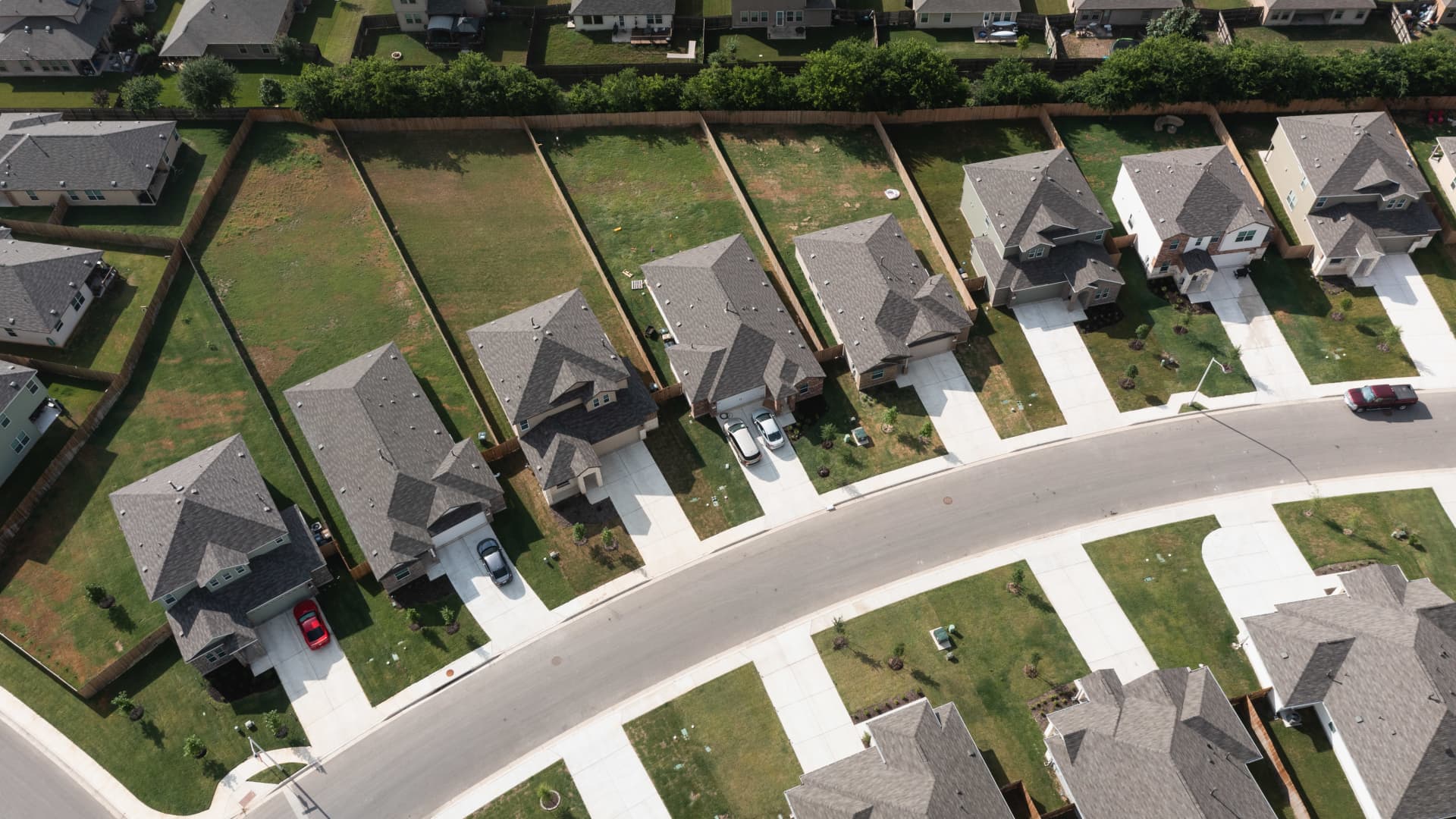
Institutional investors may control 40{0cd64a0a8f98edc6e1a333a4649a39f4fde229418ea626ab6b5ac18b9de2691d} of U.S. single-family rental homes by 2030, according to MetLife Investment Management. And a group of Washington, D.C., lawmakers say Wall Street needs to back away from the market.

“What we’re saying is don’t have private equity buying up single-family homes,” said Rep. Ro Khanna, a Democrat representing California’s 17th Congressional District. Khanna is the lead author of the Stop Wall Street Landlords Act of 2022. “What’s outrageous is your tax dollars are helping Wall Street buy up single-family homes,” he said in an interview with CNBC.

The single-family rental industry got its start with government backing in the fallout after the 2008 financial crisis. “It was that rare opportunity that attracted the institutions to build a portfolio out of these foreclosed properties,” said Steven Xiao, an assistant professor of finance and managerial economics at the University of Texas at Dallas.

Since the early 2010s, Tricon Residential, Progress Residential, American Homes 4 Rent and Invitation Homes have each bought thousands of homes. They’ve also added to the housing supply in some cases with built-for-rent communities.

Some of these companies are financed by private equity firms such as Blackstone and investment managers such as Pretium Partners.

“It’s almost a captive market,” said Jordan Ash, director of labor-jobs and housing at the Private Equity Stakeholder Project. “They’ve been very explicit about how people are shut out of the homebuying market and are going to be perpetual renters.”

These calls come after fierce housing inflation hit many Sun Belt states, including Texas, Florida and Georgia, according to the National Association of Realtors. 

The prices in some Sun Belt markets have outpaced national figures for rent inflation, according to research compiled by Zumper for CNBC. Between January 2020 and January 2023, rents for a two-bed detached home increased about 44{0cd64a0a8f98edc6e1a333a4649a39f4fde229418ea626ab6b5ac18b9de2691d} in Tampa, Florida, 43{0cd64a0a8f98edc6e1a333a4649a39f4fde229418ea626ab6b5ac18b9de2691d} in Phoenix, and 35{0cd64a0a8f98edc6e1a333a4649a39f4fde229418ea626ab6b5ac18b9de2691d} near Atlanta. That’s compared with a 24{0cd64a0a8f98edc6e1a333a4649a39f4fde229418ea626ab6b5ac18b9de2691d} increase nationwide.

Industry advocates argue that they do not control enough market share to dictate prices in any market. Large institutions owned roughly 5{0cd64a0a8f98edc6e1a333a4649a39f4fde229418ea626ab6b5ac18b9de2691d} of the 14 million single-family rentals nationally in early 2022, according to analysts.

By 2030, the institutions may hold some 7.6 million homes, or more than 40{0cd64a0a8f98edc6e1a333a4649a39f4fde229418ea626ab6b5ac18b9de2691d} of all single-family rentals on the market, according to the 2022 forecast by MetLife Investment Management.

In the short term, however, some companies may retreat from the real estate market as correction concerns mount. “You will see some selling by us,” said Jon Gray, Blackstone’s chief operating officer, in a December 2022 interview with CNBC.

Watch the video above to learn about the rise and future of corporate landlords in the United States.

Airbnb aims to convince more people to rent out their homes

Airbnb aims to convince more people to rent out their homes

Convinced that the boom in leisure travel is permanent, Airbnb aims to expand its listings by convincing more people to turn their homes into short-term rentals.

The company said Wednesday that it will increase the amount of liability coverage for hosts, up to $3 million, in a play for owners of nicer houses in high-cost places such as California. It will also pair newbies with a “superhost” to guide them through the process of becoming a short-term landlord, from signing up through welcoming their first guest.

More listings would not seem to be Airbnb’s biggest challenge.

CEO Brian Chesky says the San Francisco company is taking steps to make price more transparent when consumers browse Airbnb listings, and he predicts that will reduce sky-high cleaning fees that many hosts tack on well into the booking process — a major complaint of consumers.

The company also continues to try to crack down on large parties at rentals, a few of which have turned violent. And it faces efforts to increase regulation of short-term rentals.

Through it all, Airbnb has fared better than most travel companies during the pandemic. This month, it reported a record $1.21 billion profit for the third quarter. Its stock fell, however, because earnings and bookings were less than Wall Street expected and the company gave a cautious fourth-quarter outlook.

Investors worry that consumers paying more for food, gas and housing — and facing predictions of recession — will cut back on discretionary spending like travel, hurting Airbnb.

Some current hosts are worried that might already be happening. Last month, a post on a Facebook page for Airbnb “superhosts” asked, “Has anyone seen a huge decrease in bookings over the last 3 to 4 months? We went from at least 50{0cd64a0a8f98edc6e1a333a4649a39f4fde229418ea626ab6b5ac18b9de2691d} occupancy to literally 0{0cd64a0a8f98edc6e1a333a4649a39f4fde229418ea626ab6b5ac18b9de2691d} in the last two months.”

Other hosts on social media have suggested theories ranging from a fragile economy to pent-up travel demand finally running out, and some think the problem might be that Airbnb already has too many listings.

Chesky said in an interview that Airbnb has enough hosts now — he didn’t say it has too many — but needs more because leisure travel will keep growing. And, he said, a recession could push more people to turn their homes into Airbnbs. After all, he likes to point out, Airbnb launched during the great recession in 2008.

“People are pulling back spending in tons of areas, but not travel,” he said. “And with a looming recession, we felt like more people than ever are going to want to make extra money.”

Potential hosts sometimes hesitate, Chesky said, because they are uncomfortable having strangers in their homes. The company’s response is to triple the amount of coverage for hosts — from $1 million to $3 million — against damage, including to vehicles, boats and a wider range of art on the property.

Chesky is betting that will persuade more owners of nice homes to list them on Airbnb.

“Exactly, and home values have increased since we wrote the $1 million plan,” he said. “We just noticed more than 20{0cd64a0a8f98edc6e1a333a4649a39f4fde229418ea626ab6b5ac18b9de2691d} of the homes on Airbnb, and maybe even more than that, were over the $1 million limit in value.”

The company said it is also launching a system to verify the identity of guests and flag potential parties, immediately in the U.S. and Canada and worldwide by next spring. Chesky said the system is “not a silver bullet,” and he didn’t provide many details but said in the U.S. it will include a check of criminal and sex-offender records.

In the meantime, the company is working on a plan to display the all-in price of a stay up front on its app and website — an amount that would include cleaning fees, which can be very high and only appear later in the booking process.

Chesky said he didn’t want to bar or cap cleaning fees — that’s a decision for hosts, he said. But including fees in the upfront price — and in the order in which search results are displayed — “is going to correct the market,” he said.

This story was originally published November 16, 2022 8:00 AM.

California tenants rise up, demand rent caps and more protections from city councils

California tenants rise up, demand rent caps and more protections from city councils

ANTIOCH, Calif. (AP) — Kim Carlson’s condominium has flooded with human feces multiple occasions, the plumbing by no means fastened in the low-money housing sophisticated she calls house in the San Francisco Bay Region suburb of Antioch.

Her assets supervisor is verbally abusive and phone calls her 9-yr-outdated grandson, who has autism, a slur phrase, she explained. Her heater was busted for a thirty day period this wintertime and the dishwasher has mould escalating under it. But the last straw arrived in May perhaps: a $500 rent raise, bringing the lease on the two-bed room to $1,854 a thirty day period.

Carlson and other tenants strike with likewise high will increase converged on Antioch’s Metropolis Corridor for marathon hearings, pleading for security. In September, the Metropolis Council on a 3-2 vote approved a 3{0cd64a0a8f98edc6e1a333a4649a39f4fde229418ea626ab6b5ac18b9de2691d} cap on once-a-year boosts.

Carlson, who is disabled and underneath therapy for lymphoma cancer, starts off to weep imagining what her lifestyle could be like.

“Just normality, just freedom, just becoming in a position to walk exterior and breathe and not have to walk outside the house and question what is going to come about following,” mentioned Carlson, 54, who lives with her daughter and two grandsons at the Delta Pines condominium elaborate. “You know, for the little ones to really feel risk-free. My babies don’t truly feel safe and sound.”

Even with a landmark renter safety regulation accepted by California legislators in 2019, tenants throughout the country’s most populous condition are having to ballot boxes and city councils to demand even much more safeguards. They want to crack down on tenant harassment, shoddy residing situations and unresponsive landlords that are commonly faceless firms.

Examine Additional: As Fresno tries to deal with a housing crisis, a corporate owner moves in

Elected officers, for their aspect, look far more ready than in yrs past to regulate what is a non-public deal concerning landlord and tenant. In addition to Antioch, metropolis councils in Bell Gardens, Pomona, Oxnard and Oakland all reduced maximum rent increases this calendar year as inflation strike a 40-year high. Other metropolis councils put the problem on the Nov. 8 ballot.

Leah Simon-Weisberg, authorized director for the advocacy group Alliance of Californians for Neighborhood Empowerment, suggests regional officers can no more time pretend provide and desire works when so many people are going through homelessness. In June, 1.3 million California households described becoming at the rear of on lease, according to the U.S. Census Bureau.

The problem in working-class Antioch — the place a lot more than fifty percent the populace is Black or Latino — illustrates how tenuous even a earn for tenants can be.

The two council users who voted in favor of rent stabilization are up for re-election Tuesday, with a person of them, Tamisha Torres-Walker, facing a former council member she narrowly beat two several years in the past. The nearby newspaper endorsed Pleasure Motts and called Torres-Walker, who was homeless as a young adult, polarizing.

Mayor Lamar Thorpe, who presented the 3rd vote, faces sexual harassment allegations by two women of all ages, which he denies. They are component of a progressive Black greater part.

If either member loses her seat, the hire ordinance could be repealed.

The two council members who voted no are both of those in the authentic estate business, and not up for re-election.

A at the time mainly white suburb, Antioch has turn out to be a lot more politically liberal as Black, Latino and small-revenue inhabitants compelled out of San Francisco and Oakland moved in. Advocates tried out for years to mobilize tenants, but it took the shockingly substantial rent-hike notices and the expiration of a statewide eviction moratorium in June to get movement.

View: 5 factors housing is so highly-priced suitable now

Outraged tenants jammed into council chambers describing fridges pieced from spare areas and washing machines that reeked of rotten eggs. They spoke of skipping foods, operating several careers and dwelling in consistent terror of turning into homeless, sleeping in their car and washing their kids with bottled h2o.

“We observed a ton of anxiety, a whole lot of desperation,” said Rhea Laughlin, an organizer with 1st 5 Contra Costa, a county initiative that focuses on early childhood. But, she stated, she also noticed folks summon the braveness “to go prior to council, to rally, to march, to talk to the push and be uncovered in a way that I imagine tenants were far too afraid to do prior to, but now really felt they experienced very little to lose.”

Teresa Farias, 36, explained she was terrified to talk in public but she was even much more afraid that she, her spouse and their three children, ages 3 to 14, would have to leave their residence. When the relatives gained a $361 hire increase detect in May well, she known as the East County Regional Group, a dad or mum advocacy group supported by Initial 5. They advised her to start knocking on doors and communicate to her neighbors.

“I seriously do not know the place my energy arrived from, to be able to discuss in general public, to be equipped to communicate in entrance of the Town Council … to question them to help us with this issue,” she claimed in Spanish outside her property at the Casa Blanca flats.

California’s tenant security regulation limitations lease boosts to a greatest 10{0cd64a0a8f98edc6e1a333a4649a39f4fde229418ea626ab6b5ac18b9de2691d} a 12 months. But a lot of types of housing are exempt, which include low-profits complexes funded by governing administration tax credits and increasingly owned by companies, restricted legal responsibility providers or minimal partnerships.

Read Additional: Throughout the U.S., rents at ‘insane’ levels with no relief in sight

The tenants who flooded Metropolis Council conferences drew largely from 4 reasonably priced-housing complexes, which include sister homes Delta Pines and Casa Blanca, wherever an estimated 150 homes been given big hire will increase in May possibly. The qualities are connected to Shaoul Levy, founder of real estate expenditure company Levy Affiliated in Santa Monica.

The hire raises hardly ever took outcome, rescinded by the landlord as the Metropolis Council moved toward approving lease stabilization. Levy did not answer to e-mail searching for comment.

Council member Michael Barbanica, who owns a true estate and house administration business, known as the lease hikes outrageous, but stated the town could have worked with the district attorney’s office environment to prosecute cost-gouging company landlords.

In its place, the rent cap penalizes all neighborhood landlords, some of whom are now organizing to provide, he explained.

“They’re not the types executing 30-40-50{0cd64a0a8f98edc6e1a333a4649a39f4fde229418ea626ab6b5ac18b9de2691d} boosts,” Barbanica reported, “yet they ended up caught in the crossfire.”

But, Carlson claimed, the city needs to pass even more tenant protections. The apartment complex is infested with roaches and her neighbors are much too scared to converse up, she stated.

Her apartment has flooded at least 7 instances in the 8 yrs she’s lived there, she said, flipping by means of cellphone photographs of her bathroom and bathtub loaded with dim yellow-brown h2o. In October 2020, she slipped from h2o pouring down from the upstairs apartment and dislocated her hip.

She has by no means been compensated, together with all the gifts dropped when the condominium flooded with drinking water on Christmas Eve 2017. Two months later, in February 2018, feces and urine bubbled from the tub and toilets.

“We got two 5-gallon buckets and a bag of plastic luggage introduced to us and we had to (urinate and defecate) in people buckets for five times simply because the toilets had been blown off the floor,” Carlson said.

The bogs nevertheless gurgle, indicating blockage. Which is when she shuts off the drinking water and waits for plumbers to very clear the backup.

Tenant organizer Devin Williams grew up in Antioch just after his mom and dad moved out of San Francisco in 2003, part of a migration of Black people leaving metropolis centers for more cost-effective households in safer suburbs. The 32-yr-outdated is devastated that the exact same chance is not offered to tenants like Carlson now.

“People have a obligation to make sure people have habitable residing situations,” he mentioned. “And their lives are just becoming exploited due to the fact persons want to make dollars.”

Ultra-luxurious Arizona homes available for rent during the week of the Big Game

Ultra-luxurious Arizona homes available for rent during the week of the Big Game

The Tremendous Bowl will appeal to an A-Listing group to Arizona, any one from stars to CEOs. A lot of of people men and women are willing to pay back a rather penny for the most effective of the finest during their stay in Arizona.

For lodging selections, there are the typical web-sites like Airbnb and Vrbo, but for individuals who truly want to up the game, there is a site named holidayrental.com that handles almost everything a man or woman would want and want.

All that, of course, arrives at a price tag.

Residence in the vicinity of Camelback Mountain will come loaded with alternatives

A single of the homes readily available for lease throughout the time the Super Bowl is in city looks like a place Oprah could keep.

The making, nestled upcoming to the Camelback Mountain, is so awesome, that it is truly called a villa.

“It is created for elite traveler celebs and persons who get pleasure from the finer matters in lifetime,” explained Christine Owens with holidayrental.com.

The 7,300 square foot villa features four bedrooms, four-and-a-50 {0cd64a0a8f98edc6e1a333a4649a39f4fde229418ea626ab6b5ac18b9de2691d} loos, and sleeps 13 individuals. It also comes with things like fireplace pits, a pool, placing greens, and a pickleball courtroom. 

“You can go out and enjoy the Super Bowl and [WM Phoenix Open] gatherings, and then have this wonderful, personal oasis to appear back again to, and relax and get away from all the crowds,” explained Owens.

The bundle offered for the villa also comes with 8 Super Bowl tickets, 8 tickets to the WM Phoenix Open up, and tickets to the Birds Nest. Also provided place 7 days-lengthy transportation, a personal chef, spa remedies, and a 24-hour concierge service.

“You will find actually a ton to do in the region and close to almost everything, but however, really secluded in an exclusive luxurious neighborhood,” claimed Owens.

Seems excellent! How considerably does it cost?

The villa, for Super Bowl week, expenditures $375,000.

There are other properties up for grabs on the holidayrental.com web-site.

Read More Tremendous Bowl Tales