
Proposed NC Rule Would Require More Flood History Disclosure on Homes for Sale

Proposed NC Rule Would Require More Flood History Disclosure on Homes for Sale
New You can now listen to Insurance Journal articles!North Carolina home buyers may soon have access to more information about a property’s flooding history, a rule that could potentially help insurance agents sell more flood insurance and other types of coverage.

The state’s Real Estate Commission last week voted unanimously to accept a petition from the Natural Resources Defense Council and other advocacy groups, and to move ahead with a rulemaking process. A hearing on the proposed disclosure rule is planned for April 20, and the final regulation could take effect by July 1, said Melissa Vuotto, rulemaking coordinator for the commission.

North Carolina, unlike most other states, historically has not required full disclosure of a home’s flood history to prospective buyers. Environmental and consumer groups and have long argued that the current rule does not give buyers enough information, adding to the unknown risks and prompting many buyers to forego flood insurance.

“Providing homebuyers with information about the potential flood risk that comes with a home will enable buyers to take appropriate steps to mitigate damages, including by purchasing flood insurance,” the petition to the commission reads.

The proposed rule would add several questions to the real estate disclosure form, requiring information from sellers, including: whether the home has ever sustained flooding or flood damage, and how often; if it has an elevation certificate; and if the property carries flood insurance and what the annual premium is. The form also would ask if the home has filed a claim through the National Flood Insurance Program or has received federal aid for flood repairs.

North Carolina regulations now require homeowners to disclose only if the home is in a designated flood hazard area and if the property is required to obtain flood insurance, according to the petition. Critics have pointed out that Federal Emergency Management Agency flood maps aren’t accurate and many homes outside the flood zones have sustained water damage through the years. FEMA officials have said that more than 20{0cd64a0a8f98edc6e1a333a4649a39f4fde229418ea626ab6b5ac18b9de2691d} of NFIP claims come from properties that are outside of flood zones.

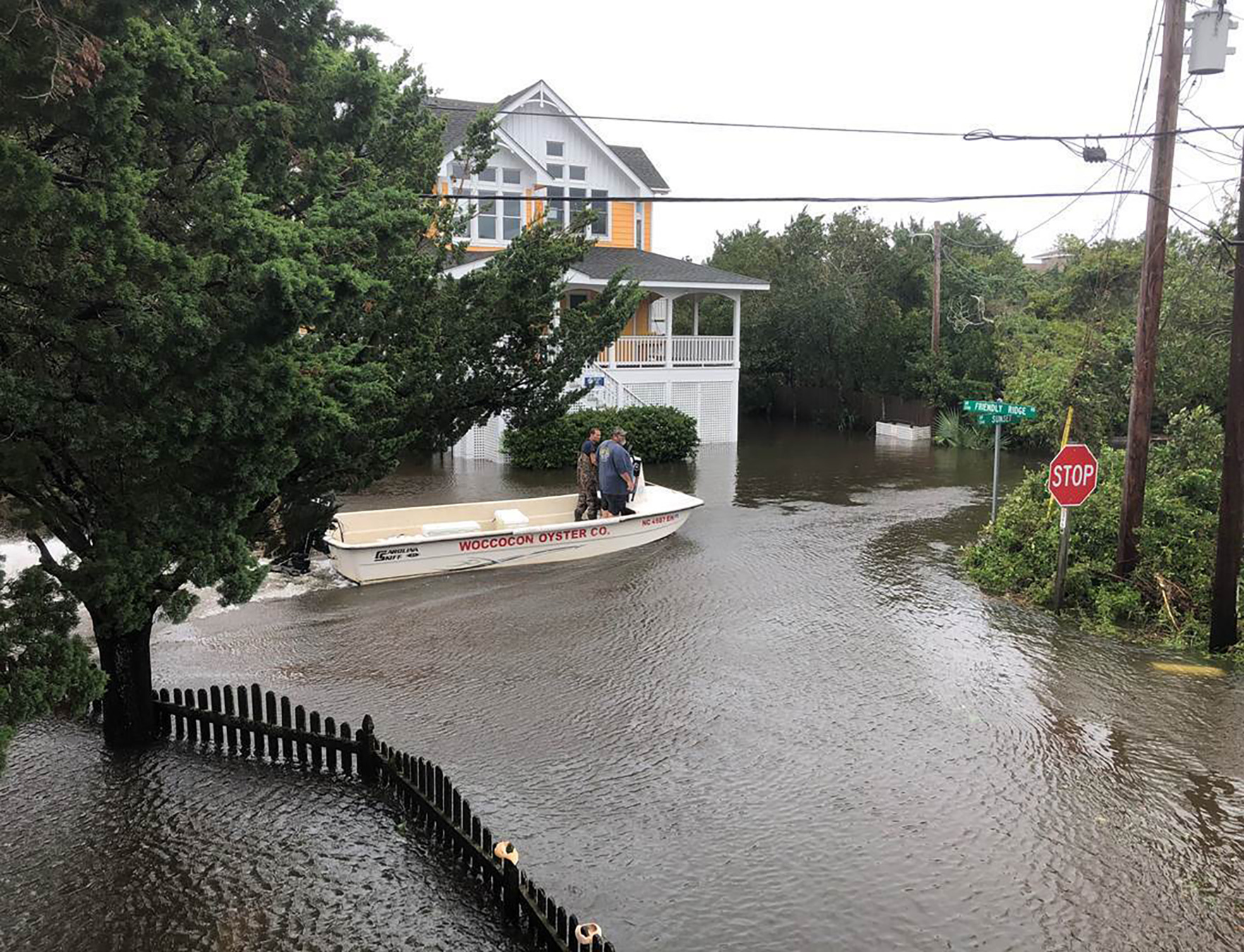
Homes are flooded along the Neuse River after hurricane Florence came through the area in New Bern, North Carolina, in 2018. (AP Photo/Steve Helber)

Research also shows that homes continue to get built in vulnerable areas, and the dangers have not always been disclosed. A study by researchers at the University of North Carolina, published this month, found that 47,414 single-family homes were built in North Carolina’s 100-year floodplain between 1996 and 2018, the Charlotte Observer reported.

A 2022 study by Milliman, the actuarial and consulting firm, found that a home buyer can face significant flood-damage costs over the life of their mortgage if they purchase a previously flooded home, the NRDC said.

The proposed disclosure rule could help level the playing field for home buyers, but it may not solve everything.

“What we have tried to remind folks is that histories and past events may be an indicator of future losses, but it’s certainly not the only indicator,” said Russ Dubisky with the Insurance Federation of North Carolina.

Just because an area has not flooded in the past doesn’t mean it won’t flood in the future, particularly with climate change bringing more rainfall to some parts of the country. Some events that may flood a basement, for example, don’t damage the home but could still be valuable information for a buyer.

“We would encourage everyone to get a quote on flood insurance, against the most common natural disaster in the U.S.,” Dubisky said.

The rulemaking petition argues that the need for full flood information has increased as repeat flood events have increased. In 2022, North Carolina documented 11,984 repetitive-loss residential properties. That’s almost a 30{0cd64a0a8f98edc6e1a333a4649a39f4fde229418ea626ab6b5ac18b9de2691d} increase in just five years, based on NFIP data, the groups said.

From 1996 to 2021, the state suffered 4,382 flood events, resulting in more than $1.6 billion in property and crop damage, the petition notes.

But despite widespread flooding in recent years from hurricanes and tropical storms, “homebuyers in North Carolina are not entitled to information about past flooding damage,” the groups said.

Besides NRDC, the petitioners include the North Carolina Justice Center, which works to eliminate poverty. It argued that flood events disproportionately harm lower-income households. Other petitioners include the North Carolina Disaster Recovery and Resiliency School and the Robeson County Church and Community Center, which was heavily flooded in Hurricane Matthew in 2016.

Top photo: Ocracoke Island in North Carolina, after Hurricane. Dorian Friday in 2019 (Connie Leinbach/Ocracoke Observer via AP)

Topics
Flood
North Carolina

Interested in Flood?

Get automatic alerts for this topic.

These $400,000 Rochester homes share ‘extra character around each corner’

These 0,000 Rochester homes share ‘extra character around each corner’

Apr. 16—ROCHESTER — As spring cleaning and home improvement projects kick in, home sales and inventory are improving in Southeast Minnesota.

The Southeast Minnesota Realtors association, which represents an 11-county region, reported inventory as “up slightly,” according to Eric Brownlow, association executive and government affairs director. March 2023 saw 662 homes for sale compared to 608 homes in February.

In the $400,000 to $500,000 range, about 30 homes are on the market in Rochester with 22 in March. As of Friday, April 14, 210 total homes are for sale in Rochester with 219 homes in March and 173 in February.

Rochester’s median sales price was $305,000 for January to March 2023, according to the association.

“Our market’s getting tough, tougher for price-wise,” said Dustin Kanz, RE/MAX Results Realtor. “I just think overall square footage, location and the updates in these homes is what’s dictating that they’re selling good or not. Buyers these days want move-in ready.”

Here are two Rochester houses in the $400,000 to $500,000 range.

There’s one home that readily “pops” for Dwell Realty Group Realtor Lauren Boutin — not just because of the olive green facade but from memories of growing up in Rochester. She remembers the unique architectural elements and the 1959 home undergoing modern updates.

“This has actually been one of my favorite homes in Rochester my whole life,” Boutin said. “One, the cupola over the garage was always catching my eye, and just architecture of the home, the age of it, how they’ve maintained it and currently the color of the home as well is extremely attractive.”

The five-bedroom and three-bathroom home at 510 16th St. SW is listed at $409,900.

The home’s cupola design is a small structure with air vents and a curved piece leading to a weather vane, Boutin said. Encyclopedia Britannica notes the 19th century

popularity of cupolas

as a distinguishing feature on homes in the United States. The

“ornamental architectural detail”

started in the Middle East and India in the eighth century and extended to Russia, Spain and England in the 17th and 18th centuries, according to ThoughtCo and Encyclopedia Britannica.

Boutin sees “a little bit of extra character around each corner” in the home, such as the mudroom’s in-floor heat and original bathroom tile.

“It has the vintage tile features in really good condition, which is actually, I think, a great benefit to the home. It doesn’t feel all new and sterile, it has that character to it,” Boutin said.

On the 0.79-acre lot, three of the five bedrooms are on the main floor. Boutin said the finished basement also adds extra space for family and friends. She added the “indoor-outdoor entertainment space” shines in the kitchen and backyard.

“You kind of are surprised when you walk out the back with just how much space you have,” Boutin said.

If Kanz could pitch one characteristic of a tiered home at 1014 Northway Lane NE, he’d choose the bonus room above the garage. The pitched roof system places the bonus room in the second pitch with its own door access.

“You don’t see that in too many homes above the garage, it’s nice to have that bonus room,” Kanz said.

He said the bonus room is best utilized as a hobby room or kid’s room, though the 20-by-15 space is open to many possibilities. The four-bedroom and four-bathroom home is listed at $410,000.

The updated flooring, carpet, hardwood, vanities and tiles also make the “updated modern” home a “nice move-in ready home,” Kanz said. He added the light, open spaces are showcased with “nice tall ceilings with lots of tall windows for natural sunlight coming in.”

“It’s really been updated a lot in the last 10 years, pretty much everything’s been updated. It’s got really a nice, private manicured landscape backyard with like three patio levels,” Kanz said. “They’ve got lots of flowers and water fountains, and nice features like that for privacy.”

High-end realtors of Los Angeles on why the mansion tax is fundamentally misguided

High-end realtors of Los Angeles on why the mansion tax is fundamentally misguided

Josh Altman has been appearing regularly on Bravo’s Million Dollar Listing for several years now, where the Los Angeles-based realtor shows exactly that: multimillion-dollar homes for sale in the city of angels. But the Douglas Elliman realtor has a message about the so-called mansion tax on every property sale above $5 million in Los Angeles County: “We’re not talking about these crazy mansions that you see on MTV Cribs.” 

A $5 million house “may be a mansion in Minnesota,” he added, “that’s not a mansion in L.A.” For those unfamiliar with Los Angeles’ extremely stratified housing market, Altman explained that what you get for $5 million in most of Los Angeles “could be a four-bedroom, 4,000-square-foot regular house that you would find anywhere in America, but it just happens to be more expensive because it’s in L.A.”

Altman and others of his ilk talked to Fortune about Measure ULA, which is essentially an additional 4{0cd64a0a8f98edc6e1a333a4649a39f4fde229418ea626ab6b5ac18b9de2691d} tax on Los Angeles property sales over $5 million and 5.5{0cd64a0a8f98edc6e1a333a4649a39f4fde229418ea626ab6b5ac18b9de2691d} on those above $10 million—with the tax being paid by the seller. It passed with nearly 58{0cd64a0a8f98edc6e1a333a4649a39f4fde229418ea626ab6b5ac18b9de2691d} of the vote in November but went into effect beginning on April 1, and adds more pain to a pandemic home price correction that has been sharper out west than anywhere else, as the region is  hypersensitive to interest rate hikes and has home prices unusually detached from average local incomes. On the high end, the L.A. luxury segment has declined 55.5{0cd64a0a8f98edc6e1a333a4649a39f4fde229418ea626ab6b5ac18b9de2691d} in terms of home sales in the three months ending January 31, per Redfin. And the mega-realtors and brokers of L.A. are apocalyptic about what the new tax will do. “I think that it is the worst thing [to] happen to the real estate market in Los Angeles since 2007, 2008,” Altman told Fortune.    

The city says the tax will generate a new revenue stream to combat its homelessness crisis through affordable housing projects and prevention efforts. As of last year, 41,980 people experienced homelessness in the City of Los Angeles. And this tax, the city says, can generate up to $672 million this year. 

Altman described the mad dash of many upper-income home sellers to beat the deadline, adding that it’s been a bit “silly” to watch what’s gone down before the April 1 deadline, with everything from cars to vacation homes being thrown into deals just to close before the mansion tax takes effect. At the time of our call, Altman said he was negotiating two G-Wagons (the Mercedes-Benz G-Class) as a throw-in for a house being sold days before the deadline. He calculated that he was closing 25 deals in the 72 hours before April 1. In a separate case, he and Jade Mills, a Coldwell Banker Global Luxury Ambassador, offered any real-estate agent a $1 million bonus on top of commission to close a nearly $28 million home in Bel Air before the first of the month. Altman knows it’s absurd, but he said “this has been completely forced on us.” 

Some in the industry also say this tax isn’t the ideal way to solve the city’s homelessness problem. Altman told Fortune to think about it like this: let’s say you bought your home for $5.2 million a few years ago, but with interest rates going up and a market that’s down, your house is worth just slightly over $5 million now. If you were to sell, with this new tax in place, you’d be taking a loss on your property while paying an additional tax of around $200,000. This is exactly the point, proponents of the measure say, claiming it would “reduce homelessness, make housing more affordable, and protect low-income seniors from losing their homes.” 

An analysis of Measure ULA, published in September of last year and authored by UCLA researchers, among others, found that the tax would only affect approximately 4{0cd64a0a8f98edc6e1a333a4649a39f4fde229418ea626ab6b5ac18b9de2691d} of real-estate transactions in a given year, and 72{0cd64a0a8f98edc6e1a333a4649a39f4fde229418ea626ab6b5ac18b9de2691d} of its revenue would come from properties sold over $10 million. (The average home value in Los Angeles is $891,820, according to Zillow.) The researchers argued that the measure “represents a holistic approach to the city’s housing affordability and homelessness crises.” In other words, these luxury real-estate professionals are playing quite a tiny violin. 

Altman said that misses the point: This is likely to affect everyone and trickle down to owners of $2 million and $3 million homes, “because everyone’s values are going to be lowered.” 

Juliette Hohnen, a Beverly Hills-based realtor with Douglas Elliman, told Fortune that voters likely looked at this measure and thought “the rich should pay for it,” but this will also affect developers on the commercial side, too, and she’s worried about them leaving the state permanently. This could backfire: “We need more homes here. We don’t need people holding onto their homes and making them high-level rental opportunities.” 

Hohnen said when she bought her own home, it wasn’t worth $5 million, but now it is and she won’t ever sell because of this tax. “My house is my biggest asset,” she said.

Jason Oppenheim, founder and president of The Oppenheim Group—the setting of Netflix’s “Selling Sunset,” has been an opponent of the measure from the start, calling it “ill-conceived.” Before diving into the measure on our call, he paused a few times, seemingly giving orders to his team while on the line. He told Fortune that before it went into effect, Measure ULA had already “drastically restricted development” in Los Angeles. 

“Developers create microeconomies when they develop properties,” Oppenheim said, which ​​injects millions of dollars into the economy. He said he sees development is now almost completely shut down because of Measure ULA, as it’s just not as profitable for developers. 

Oppenheim said that makes it “no longer feasible for people to make enough money to want to develop.” That being said, it also reduces sales volume, lowers transactions, and reduces property tax revenue. These developers are going to develop in Beverly Hills, Newport Beach, or other cities where there isn’t a tax like this, Oppenheim said: “We’re losing all of that money that is injected into these microeconomies.”

“It’s very easy to avoid the tax, and guess who benefits? Beverly Hills does, L.A. loses,” Oppenheim said, adding that he wouldn’t consider selling any of his properties right now because of the tax. With the real-estate sector already headed in a “very difficult direction” with transaction volume slowing, “now the mansion tax will drastically slow sales in the luxury market, and almost crush any demand from developers, and you’ve got prices going down.” 

Emil Hartoonian, managing partner at The Agency, agreed that once people understand the tax, buyers and sellers who don’t want to pay it will gravitate toward nearby, untaxed areas like Calabasas and Beverly Hills because “it’s a big pill to swallow,” he told Fortune.  

Altman’s alternative, or at least what he considers to be a “fair tax?” A 1{0cd64a0a8f98edc6e1a333a4649a39f4fde229418ea626ab6b5ac18b9de2691d} tax across the board, from a $500,000 condo to a $50 million house, on profits. Oppenheim shared a similar sentiment, that he wouldn’t be “against, potentially, a 1{0cd64a0a8f98edc6e1a333a4649a39f4fde229418ea626ab6b5ac18b9de2691d} tax on all property,” to go towards reducing homelessness. But at this point, Altman thinks “there’s going to be a lot of inventory and that’s going to affect the market,” a mansion glut, if you will.

Inside a $218 million private island in Palm Beach, Florida

Inside a 8 million private island in Palm Beach, Florida

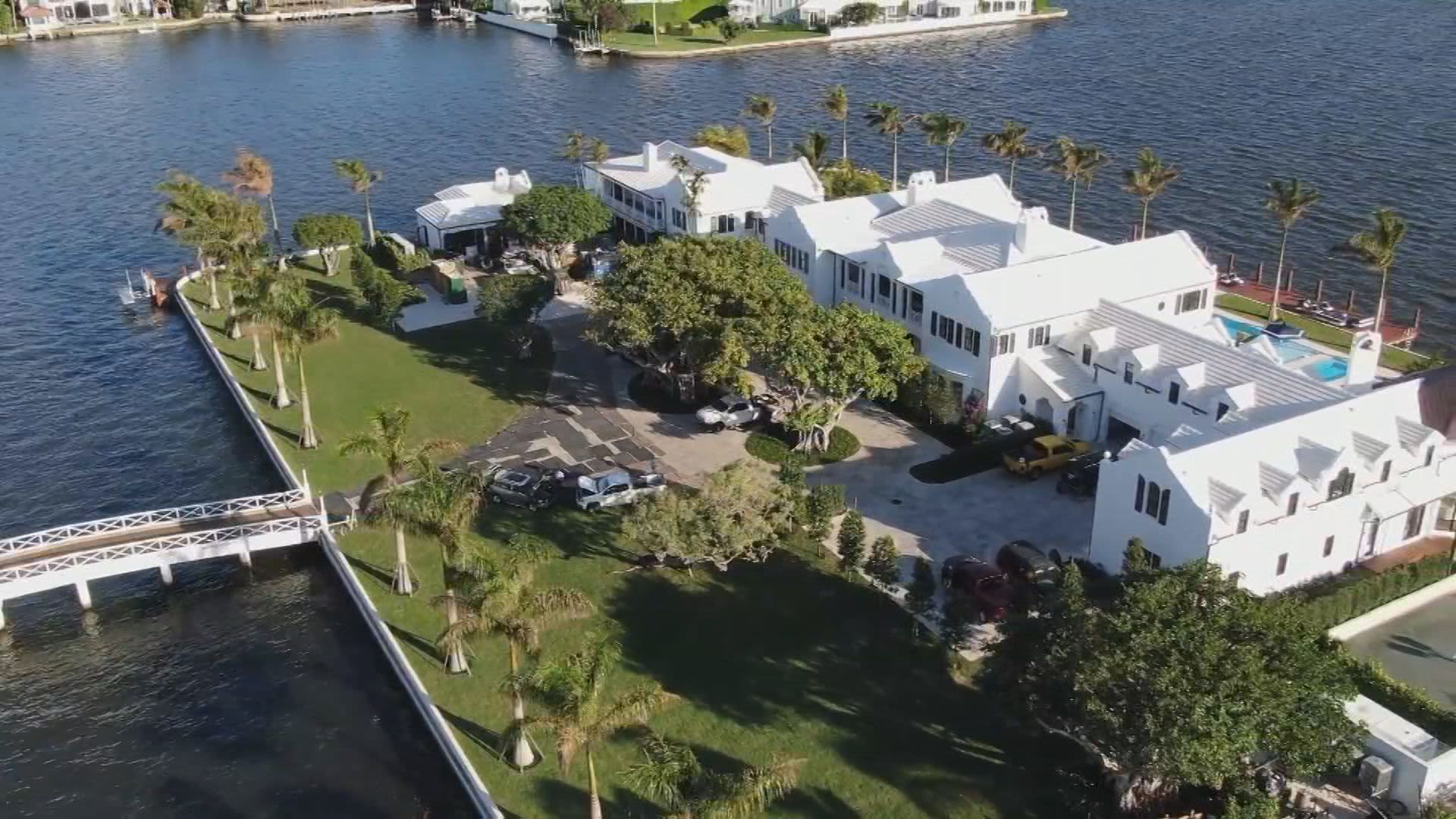
A private island in Palm Beach could become the most-expensive home ever sold in Florida, if it gets its asking price of $218 million.

Developer Todd Michael Glaser and his partners bought 10 Tarpon Isle — the only private island in Palm Beach — for $85 million in 2021. They built a brand new house, turned the existing structure into a guest house, and added a giant pool, tennis courts and other amenities and have now relisted the property.

“I paid $85 million without a hesitation because there’s only one of them,” Glaser said. “You watch art, they sell. There’s a Mercedes 300 SLR that just sold for $142 million. … That’s what this is … it’s a one of one.”

Tarpon Isle, a private island in Palm Beach, Florida, is on sale for $218 million.

CNBC

When Glaser bought Tarpon Isle, it held a modest 1940s house and plenty of potential.

“I came over the bridge, I saw the two trees and I said, ‘Guys, let’s knock down the garage and the guest house and the maid’s quarters and let’s build a brand new house,'” Glaser said.

The new main house is over 9,000 square feet. With the guest house, tennis pavilion and other structures, the property now has over 21,000 feet of living space. There are 11 bedrooms, 15 full bathrooms and seven half-baths.

Tarpon Isle, a private island in Palm Beach, Florida, is on sale for $218 million.

CNBC

Unlike many Palm Beach mansions, which are Mediterranean-styled giants festooned with gold carvings and mahogany, Tarpon Isle is a study in modern simplicity, where the star of the home is sweeping water views on all four sides.

The master bedroom suite is a large complex of closets, bathrooms and sitting areas. The larger of two bathrooms is a temple of white Italian marble, covering the floors, countertops, ceiling and oversized shower. A large soaking tub perched in front of the windows overlooks the Intracoastal Waterway.

A waterfront bathroom inside the main home on Tarpon Isle, a private island in Palm Beach, Florida, on sale for $218 million.

CNBC

“It’s the best bathroom I ever did,” Glaser said. “My wife picked it, and she did an incredible job. I’ve never seen anything like this bathroom.”

Outside, there’s a new 98-foot pool overlooking the views of the water to the south. A large dock can fit multiple boats or a mega-yacht. The guest house features resort-like amenities, including a spa, massage room, salon and entertainment area.

“That’s the way we designed it,” Glaser said. “When people come to Palm Beach they bring their families, they’re on vacation.”

A dock servicing Tarpon Isle, a private island in Palm Beach, Florida, on sale for $218 million.

CNBC

Glaser said the human-made island, which was built in the 1940s, has a high sea wall. Because it’s well protected in the Intracoastal and well elevated, it has easily weathered big storms and tidal surges, he said.

Granted, $218 million is an ambitious price, even for Palm Beach. The record sale in the enclave was Oracle founder Larry Ellison’s $173 million purchase of billionaire Jim Clark’s oceanfront estate last year.

A living space inside the main home on Tarpon Isle, a private island in Palm Beach, Florida, on sale for $218 million.

CNBC

Palm Beach is the most expensive real estate market in the country, with an average sale price of nearly $13 million, according to Douglas Elliman and Miller Samuel. Many homes saw their prices more than triple during the pandemic as ultra-wealthy buyers from the Northeast fled to Florida, and the coveted properties in Palm Beach in particular.

Christopher Leavitt of Douglas Elliman, who is listing the property alongside Christian Angle Real Estate, said interest in the property has been strong, especially from hedge fund managers and finance chiefs looking to relocate south.

“The buyer of this home is someone who wants the one and only private island on the island of Palm Beach, surrounded 360 degrees by water, accessible by your boat or a private bridge,” Leavitt said. “It’s somebody who wants that one property that no one else has, that one trophy property.” 

Glaser declined to say what profit he would make if the home sells for its asking price. He added that he and his investors spent “a fortune” on the new home and improvements. But he said the buyer will be making a long-term investment.

“Whoever buys this house, in five years they’re going to be very happy with the purchase,” he said. “It’s a legacy property that they’ll own for the rest of their lives.”

Tarpon Isle, a private island in Palm Beach, Florida, is on sale for $218 million.

CNBC

Hot homes: 5 Denver-area houses for sale, starting at $500K

Hot homes: 5 Denver-area houses for sale, starting at 0K
Alayna Alvarez

3820 Shoshone St. Photo: Courtesy of Compass

This week’s Hot Homes roundup includes a handful of unique Denver properties packed with plenty of charm.

2942 Glenarm Place — $500,000

Why we love it: This cheery and light-filled residence, nestled in one of Denver’s most historic neighborhoods, offers an attached ADU with possibilities for a personal office, guest house or rental unit.

  • Neighborhood: Five Points
  • Specs: 2 bedrooms, 2 bathrooms, 1,121 square feet above, 304-square-foot basement
  • Listing agent: Jennifer Johnson at milehimodern
  • Features: Covered front porch, beautiful front door with stained glass windows, large windows, spacious kitchen with neutral-tiled backsplash.
2942 Glenarm Place. Photo: Courtesy of Rae Scott/milehimodern
1756 South Clarkson St. — $1,175,000

Why we love it: This turn-of-the-century charmer packs plenty of curb appeal and boasts a breathtaking patio that’s perfect for parties.

  • Neighborhood: Platt Park
  • Specs: 2 bedrooms, 2 bathrooms, 1,651 square feet
  • Listing agent: Abell to Sell
  • Features: Hardwood floors, sunroom, wine cellar, primary suite with vaulted ceiling, five-piece bathroom, fireplace, walk-in closet and outdoor access.
1756 South Clarkson St. Photo: Courtesy of Compass
3820 Shoshone St. — $1,350,000

Why we love it: This ultra-contemporary half-duplex features a functional glass garage door that opens to the rear patio and large backyard — an entertainer’s dream.

  • Neighborhood: Sunnyside
  • Specs: 4 bedrooms, 5 bathrooms, 3,233 square feet
  • Listing agent: David Schlichter at Compass
  • Features: Gourmet chef’s kitchen with long quartz island, hardwood floors, floating stairwell, large living room with gas fireplace, primary suite with five-piece bathroom and double walk-in closets, west-facing balcony.
3820 Shoshone St. Photo: Courtesy of Compass
2955 Inca St., Unit 1H — $1,350,000

Why we love it: Whether you want to turn this space into a personal residence or an office space, the choice is yours at this towering, two-story corner unit — the largest in Ajax Lofts.

  • Neighborhood: Ballpark
  • Specs: 2 bedrooms, 2 bathrooms, 2,402 square feet
  • Listing agent: Diane Hiley at Compass
  • Features: Soaring 20-foot wood ceilings, floor-to-ceiling windows, polished concrete floors, heavy timber beams, exposed brick, two deeded parking spaces in secured underground garage.
2955 Inca St., Unit 1H. Photo: Courtesy of Compass
400 South Steele St., Unit 16 — $3,950,000

Why we love it: Elegance and sophistication are embodied in this expansive abode, which sits just blocks away from the Cherry Creek shopping district.

  • Neighborhood: Hyde Park
  • Specs: 4 beds, 4 baths, 8,831 square feet
  • Listing agent: Laura Seitz at Compass
  • Features: Hardwood flooring, expansive kitchen with custom cabinetry and a large center island, fireplace, primary suite with five-piece bathroom, spacious balcony, finished basement for entertaining, covered patio, three-car attached garage.
400 South Steele St., Unit 16, Photo: Courtesy of Compass

🌱

Support local journalism by becoming a member.

Learn more

More Denver stories

No stories could be found

Denverpostcard

Get a free daily digest of the most important news in your backyard with Axios Denver.

🌱

Support local journalism by becoming a member.

Learn more

Buyers Market? Homes for Sale Are Staying on Market Longer

Buyers Market? Homes for Sale Are Staying on Market Longer

Many companies featured on Money advertise with us. Opinions are our own, but compensation and
in-depth research determine where and how companies may appear. Learn more about how we make money.

Ads by Money. We may be compensated if you click this ad.AdAds by Money disclaimer

As the housing market continues to cool, homes aren’t selling nearly as quickly as they did during the pandemic real estate frenzy.

The typical home spent 67 days on the market in February, according to new data from Realtor.com. That’s 23 days longer than in February 2022, but it’s still a few weeks less than typical homes spent on the market in the years leading up to the pandemic. Between 2017 and 2019, Realtor.com found that the typical home spent 87 days on the market in February.

Ads by Money. We may be compensated if you click this ad.AdAds by Money disclaimer

Want to buy a home this year? AmeriSave Mortgage can help

Lock in a Mortgage Rate before you start shopping. AmeriSave Mortgage can make it possible. Click on your state today to find the rate that’s right for you.

HawaiiAlaskaFloridaSouth CarolinaGeorgiaAlabamaNorth CarolinaTennesseeRIRhode IslandCTConnecticutMAMassachusettsMaineNHNew HampshireVTVermontNew YorkNJNew JerseyDEDelawareMDMarylandWest VirginiaOhioMichiganArizonaNevadaUtahColoradoNew MexicoSouth DakotaIowaIndianaIllinoisMinnesotaWisconsinMissouriLouisianaVirginiaDCWashington DCIdahoCaliforniaNorth DakotaWashingtonOregonMontanaWyomingNebraskaKansasOklahomaPennsylvaniaKentuckyMississippiArkansasTexas

View Rates

Not all products are eligible. All loans are subject to credit approval. Additional terms & conditions apply.

What the data shows

The amount of time a home spends on the market varies significantly by location, Realtor.com’s data shows. In Columbus, Ohio, for instance, the typical home spent a median of 42 days on the market last month. A year ago, a typical home there sold within just 25 days. That’s an increase of 17 days.

Here are the cities where the time a typical home spent on the market rose the most in February compared to a year earlier:

  • Austin, Texas: +52 days
  • Raleigh, North Carolina: +51 days
  • Denver, Colorado: +42 days
  • Las Vegas, Nevada: +42 days

It’s no coincidence the four cities above were some of the hottest housing markets during the height of the pandemic. The typical home in the red-hot city of Austin sat on the market for 72 days before selling in February 2023, compared to just 20 days in the same month a year ago.

In Hartford, Connecticut, on the other hand, the time a typical home spent on the market decreased by two days between last month and the same month last year.

What the experts are saying

Even though fewer homeowners than usual are putting their homes on the market this winter, Realtor.com chief economist Danielle Hale says there are significantly more homes for sale now than there were a year ago.

In a news release, Hale attributes that phenomenon to persistently high home prices and high mortgage rates, which are dampening demand from buyers, and suggests that sellers begin adjusting to this new market dynamic.

“With a smaller pool of buyers today and more competition from other homes on the market, home sellers will likely need to adjust their price expectations in the market this spring,” she said.

Ads by Money. We may be compensated if you click this ad.AdAds by Money disclaimer

Take the first step to becoming a homeowner today

Get a Mortgage Rate that works for you. AmeriSave Mortgage can help you get started with just a few clicks. Get started now by clicking below.

View Rates

Not all products are eligible. All loans are subject to credit approval. Additional terms & conditions apply.

More from Money:

Housing Affordability Is Now at ‘the Lowest Level in History’

10 Cities With the Biggest Increase in Homes for Sale Compared to a Year Ago

It’s a Buyer’s Market. So Why Aren’t More People Buying Homes Right Now?