
No One Should Have to Spend Most of Their Income on Rent

No One Should Have to Spend Most of Their Income on Rent

If you visit Portugal’s most popular property search engine and look for a one-bedroom flat in Lisbon, you’ll find nothing cheaper than a twenty-five square meter (eighty-two square foot) studio for €700 a month. There’s barely any space around the bed, and even less in the bathroom. An ever-so-slightly larger flat in the same area goes for €800 a month; in return for the extra five square meters (16.4 square feet) you’ll get little natural light, and the bedroom is entirely windowless. You’ll also be on the ground floor, at the mercy of street noise, and losing all privacy were you to open a window on one of Lisbon’s hot summer nights.

Both these flats are considered “bargains” by those offering them because of their location, relatively good condition, and price. But with Lisbon’s average salaries at just under €1,500 a month, each listing demands devoting half of one’s earnings to securing shelter alone. That’s without the cost of amenities such as electricity, water, and internet. In fact, Eurostat figures show that renting a one-bedroom apartment in the capital (not including the tourism-inflated prices of the old city center) demands on average 63 percent of a Lisboner’s wages. In London, a city infamous for its extortionate housing costs, the number is closer to 40 percent.

The same shocking phenomenon is witnessed in most of Portugal’s cities — and it’s getting worse. Shortly after Christmas, a survey by real estate agency Imovirtual found that tenancies had risen nearly 50 percent between 2021 and 2022. The average rent in the capital is now at over €2,000 a month. In the city of Évora, an hour and a half south of Lisbon, rents had soared 127.3 percent in just twelve months. They’re now around €1,355 monthly. Meanwhile, Portugal has the tenth-lowest average income of the European Union, with the typical full-time worker earning €1,600 a month before taxes. Minimum wage is €760 a month. You don’t need to be an economist to realize the math doesn’t add up.

Portuguese comedian Diogo Faro found himself as the unlikely face of the housing crisis. In a viral short video, Faro satirizes the exorbitant rental increase, the cost-of-living crisis, stagnant salaries, and the fact that despite these stats, the foreign press and many “digital nomads” continue electing Portugal as a dream destination. “What was most interesting was people’s responses to the video,” Faro tells me. “Very organically, people started sharing their experiences [with me] and when I shared those testimonies a snowball of more testimonies would come through.” Platforming average people’s experiences with the housing crisis didn’t just raise awareness of the problem — it made many feel seen and vindicated. Faro believes it allowed people to think, “I’m not crazy after all,” and, “There are many other people in the same situation as me.”

With his boyish looks and colorful nails, Faro could easily pass for Gen Z, but he is in his mid-thirties. During the pandemic he, too, felt the cruelty of the housing market when, finding himself with less work due to the lockdown, he asked his landlady for a rent reduction. She refused, and Faro ended up having to leave his home of six years. He got lucky, he adds, and found another place nearby, but the experience left a bitter taste.

“Society, capitalism, the system we live under, promises that if we study and work and become skilled, we will have our independence, a good life,” Faro says, “but then you reach thirty-something, forty, and you have to live in a room [in a shared house].” Some of the people that contacted him over the past few months were doctors, nurses, and teachers, many of them in dual-income households but still unable to afford a home in inner Lisbon or Porto. “This has exploded because it has now reached the middle classes, unfortunately the poor, lower classes, have been struggling with housing for a long time now,” Faro adds.

In the wake of his viral video, Faro helped found the Housing Is a Right (Casa É um Direito) campaign. Together with many long-standing organizations, the group is planning a national demonstration for April 1. Numbers for the day are still under wraps, but there are at least fifteen groups involved, and the event will be supported by the European Action Coalition for the Right to Housing and to the City, which in turn is hosting an action week between March 24 and April 2. Across activist circles the hope is that the palpable and universal discontent will bring the return of the anti-austerity movement that filled the streets of Portugal a decade ago.

Recently, the Portuguese government has proposed that, as part of its wider housing program, homes staying empty for over a year could be forcibly rented out to the state. Theoretically, the duty of second-property owners to make use of those homes has been enshrined in Portuguese law for a few years. In practice, very few people have experienced the “compulsory renting” of their holiday homes or property portfolio. But remind the Portuguese bourgeoisie of this and all hell breaks loose.

Conservative and liberal pundits have come out in force, scaremongering and red-baiting galore. But in reality, the proposed package is “too little too late,” according to most housing experts. Speaking on CNN Portugal, lawyer and housing activist Vasco Barata said measures like ending the golden visa scheme and short-term letting licenses (known as Alojamento Local) are welcome but will have little impact on Lisbon and Porto, cities that have already been changed beyond recognition. The same applies to an inflation-indexed cap on the price of new tenancies. “Ten years ago it might have had an interesting effect, but now that Lisbon has an average rent of €2,000, I ask myself if in people’s lives it will make any difference,” Barata said.

Worse, to a degree the new housing policies mean a direct transfer of money from the state to private pockets. The so-called seizure of empty properties is a prime example of this — even if representatives of big capital try to drown it under the rhetoric of “attacks on individual rights.” Instead, the state is offering to rent properties at market prices, to then sublet them at a lower cost to the tens of thousands needing affordable homes. Somewhere along the line, the taxpayer covers the difference. The government is also offering tax exemptions to property owners selling their housing stock to the state. On a long Twitter thread, esteemed climate scientist João Camargo put it neatly when he wrote that the government has a “housing time bomb in their hands that they hoped to defuse with big announcements.” But the ticking timer is unlikely to slow down.

“The government is very ironic, but it isn’t funny at all because we are talking about people’s lives,” says rapper and longtime community campaigner LBC Soldjah Soldjah. Currently, LBC is lending his voice to the Vida Justa (Fair Life) movement, which hopes to put the housing crisis in the context of the wider issues afflicting Portugal’s poorest. Vida Justa is a grassroots and ground-up organization, responsible for a thousands-strong demonstration on Saturday, February 25 in Lisbon. The people Vida Justa works with aren’t just doctors and engineers. Their social media accounts are filled with testimonies from people living in social housing and the shantytowns on the urban commuter belt, the bairros. “The government measures won’t resolve any problems,” LBC continues, “starting by the way the process was organized: from top to bottom. What has the government offered those living on the outskirts? Nothing.”

The movement has three main demands: the ring-fencing of prices for essential goods, affordable homes, and better salaries. And Vida Justa isn’t shy of breaching into other urgent topics, as well as building bridges between the various movements. The Portuguese teachers’ union is supporting Vida Justa, as is Portugal’s main climate campaign, Climáximo. On Saturday we saw bairro residents walking side by side with disabled people’s rights campaigners and famous actors, such as the star of Netflix show Glória, Miguel Nunes.

“We have felt a large wave of support because people are unhappy about what is happening. That is a legitimate rage and we want people to channel that rage into fighting channels,” LBC says. The Vida Justa protest had widespread live coverage by mainstream broadcasting channels and the press, and pictures of crowds standing in front of parliament with their fists raised spread across social media. In the buildup to the demonstration on April 1, this Saturday’s protest could be seen as a watershed moment, not just for the Portuguese housing crisis, but for social justice in the country at large.

In this sense, Portugal also has rich traditions to draw on. In the eighteen months that followed the Carnation Revolution in 1974, one of the most transformative events for Portuguese society was the creation of residents’ commissions. These people’s assemblies saw local residents take ownership of their neighborhoods and make democratic decisions over logistics, construction, refurbishment of outside spaces and derelict buildings, and the allocation of resources. Empty buildings were taken over and turned into nurseries and social centers, and many shantytowns were recognized — legally allowing for state funds to come through bringing water and electricity. Nearly fifty years later, the fight for decent housing and decent living might lag a few steps behind the heady promise of those revolutionary days. But to all but the hysterical bourgeoisie, such radicalism seems to make a lot of sense once more.

Opendoor Is Playing A High-Stakes Game of Disruption: ‘Go Big Or Go Home’

Opendoor Is Playing A High-Stakes Game of Disruption: ‘Go Big Or Go Home’

With billions saved — and lost — Opendoor is dwelling by the creed “go big or go house.” Nevertheless even immediately after a dreary Q4, the iBuyer persists, which may perhaps be the biggest takeaway, Mike DelPrete writes solely for Intel.

This report is accessible exclusively to subscribers of Inman Intel, a details and investigation arm of Inman presenting deep insights and market intelligence on the business of residential serious estate and proptech. Subscribe today.

Last 7 days Opendoor posted its Q4 economic effects, revealing mega losses along with early indications of a attainable turnaround.

Mike DelPrete

Why it issues: In 2022, Opendoor seasoned an certainly devastating take a look at of its small business design – a worst circumstance circumstance party – and survived. 

At the rear of the figures: Opendoor posted a web loss of $1.4 billion in 2022, on leading of currently sizable historic losses.

  • Opendoor, and several other undertaking-funded disruptors, are burning billions of pounds to mature new business enterprise types – and the deficiency of profitability just does not issue.
  • The most noteworthy simple fact is that Opendoor dropped $1.4 billion in 2022 and is however working (albeit with a new CEO).

Income is king: Created financial metrics apart, Opendoor has a lot of (but not endless) income reserves.

  • Opendoor ended 2022 with $1.3 billion in hard cash, hard cash equivalents, and marketable securities – down from $2.2 billion at the commencing of the year.
  • That is a funds burn off of $934 million – significant losses, but a state of affairs that Opendoor was in a position to temperature without elevating more money (or going bankrupt).

Like several companies, Opendoor is racing to lower its functioning costs as promptly as probable.

  • In November, it laid off about 18 per cent of workers, and just lately introduced it experienced lowered its run-fee expenses by about $110 million.
  • Functioning bills are trending significantly reduce – a constructive sign for a firm wanting to preserve income (note: gross sales, promoting and functions flex up and down dependent on the selection of property income).

Mike DelPrete

The focal stage on which the potential of the small business rests is when Opendoor will change the corner and prevent selling properties for a loss.

  • Households that Opendoor obtained in Q3 and Q4 are undertaking a great deal better, with good gross margins.
  • Of course, but: The very first properties to provide always have the greatest gross margins – above time, with selling price reductions, gross margins slide – as expertly illustrated by Datadoor.io.

Mike DelPrete

What to observe: Income, dollars, hard cash – Opendoor’s foreseeable future as a going concern rests on its means to fund decline-building operations.

  • With $1.3 billion in the bank and the worst powering it, the corporation seems to have a lot of runway.

The base line: Opendoor is actively playing a substantial-stakes sport of disruption. 

  • With billions in the lender and billions in losses, the corporation is dwelling by the creed “go massive or go dwelling.”
  • Following encountering its one most significant obstacle in a challenging record, Opendoor persists – which might be the most significant takeaway from a brutal year.

Mike DelPrete is a strategic adviser and worldwide professional in authentic estate tech, such as zavvie, an iBuyer offer aggregator. Link with him on LinkedIn.

A Drop In The Bucket In A Country Rife With Prejudice

A Drop In The Bucket In A Country Rife With Prejudice

In the course of the country, genuine estate brokers are using classes in implicit bias and the origins and results of racism. In New York Point out, employers AND the point out each mandate these courses, so quite a few agents and managerial team are getting them 2 times. In a nation which remains rife with prejudice, do these programs basically effect people’s behavior? The jury however seems to be out.

The existence of implicit bias is not in question. Nor is it in question that it can current awful results in housing the alternatively the latest Newsday investigation relating to broker conduct on Extensive Island display that with horrifying clarity. The key trouble stays that bias is as usually institutional as it is individual. And when the individual and the institutional incorporate, the success can turn into alarming. Real estate practitioners in New York City see this about and in excess of yet again, primarily about co-ops and co-op board deliberations.

The record of prejudice in New York City co-operatives stretches back again to the starting of the co-op sort of building ownership. Whilst apartment properties, as opposed to communities like Levittown on Prolonged Island, in no way experienced express restrictive covenants in their proprietary leases, selected fundamental ideas ended up understood throughout most elegant Park and Fifth Avenue residences. No Jews. No homosexual partners. No unmarried couples. No one females. And absolutely no folks of colour.

Soon after New York’s brush with bankruptcy in the mid-1970s, some of these guidelines started to loosen up. On Park Avenue, those Jews who had been thriving in getting co-ops (mostly the so-termed “Our Crowd” Jews of German heritage) have been the only types permitted by their boards to offer their apartments to other, equivalent Jews. As prolonged as only the Jewish people sold to other Jews, the Jewish population remained secure. Following a single girl with remarkable qualifications was turned down by a Park Avenue board, she sued for discrimination and received. That fairly significantly set an close to discrimination toward females shopping for by itself. As gay partners gradually openly entered the social stream of New York culture, they far too grew to become more welcome in co-ops. But all these obstacles arrived down slowly and gradually, and at times the worst gatekeepers have been the brokers by themselves. These brokers have been not so a great deal prejudiced as fearful. They feared board rejections of these purchasers by co-op boards of directors, who thought themselves to be, literally, over and above the get to of the law.

The barrier which remained most intractable was that for individuals of color, especially Black folks. Even now, several agents really feel reluctant to choose clients of colour to lots of co-ops, fearing to expose these purchasers to nevertheless a further working experience of racial prejudice. And so, all as well generally, anxiety and the reluctance to struggle perpetuate the hideous standing quo.

The servicing of the status quo normally doesn’t increase immediately to the surface of staying apparent. It can be delicate. Is there a tiny a lot more suspicion of an unmarried Black pair? Are their financials scrutinized a bit far more thoroughly? Are their energetic digital footprints examined a bit much more carefully? And what sort of bias and discrimination instruction are the thousands of co-op board users across the metropolis obtaining? Lots of do not even fully grasp that they are subject to good housing rules.

Time will explain to no matter whether unconscious bias instruction seriously is able to penetrate the unconscious. And time is also wanted to swell the ranks of Black and Latino/Latina agents plying their trade in New York, not to point out the purchasers of coloration who opt for to run the gauntlet of getting into these venerable establishments. But most of all, we have to have pushback. Brokers have to not only be on call to facilitate inclusion but also to phone out discrimination every time they can.

In the terms of John Stuart Mill, “Bad adult males need to have practically nothing extra to compass their finishes, than that good adult men must appear on and do very little.”

US man dies from stroke days after realtor found him but didn’t call for help | North Carolina

US man dies from stroke days after realtor found him but didn’t call for help | North Carolina

A US spouse and children has demanded an investigation right after its patriarch reportedly died inside of days of acquiring a stroke in his home and being discovered but left on the ground by a real estate agent who in no way named everyone for assistance.

Cherished types of the lifeless male – 69-year-aged Randy Vaughan of North Carolina – are increasing issues about irrespective of whether the real estate agent must have been envisioned to do much more. The state company that oversees realtors in North Carolina has indicated it is opening an inquiry into the circumstance and is scheduling interviews with Vaughan’s family members about his death, the Winston-Salem Journal newspaper documented Friday.

“It’s about essential decency, caring for your fellow human beings and getting a qualified,” Vaughan’s brother, Doug, explained to the Journal.

The realtor, for her aspect, reportedly informed the Journal she has “an attorney involved” and has “no liability”.

In accordance to the Journal, the Vaughans grew to become nervous when they did not see or listen to from Randy on his grandson’s birthday. His daughter, Heather, drove to his home on 14 February and didn’t see his truck in the driveway, so she named authorities to look at no matter whether he was at a weekend property together Superior Rock Lake that he was offering.

Area sheriff’s office deputies located his truck outside the property, and after using a lockbox code to go within, they located Randy Vaughan on the floor unresponsive, the Journal claimed. Health professionals identified that he’d had a stroke, and they took him by helicopter to a hospital in North Carolina.

Issues for his spouse and children got even even worse when they realized from a real estate agent who was doing the job with Vaughan to promote the house that a further agent experienced been to his location on 13 February to demonstrate it to a shopper. In an on the internet responses type, that agent described viewing a disrobed Vaughan on the ground and fearing that he was possibly lifeless. But, soon after listening to Vaughan groan, the agent speculated that most likely he had also a lot to drink although viewing the Super Bowl the preceding night time, and she just still left – with out contacting for crisis medical support – soon after she requested if he was Alright and received no remedy.

“I didn’t want him waking up to me standing above him!” wrote the agent, determined as Ellen-Nora Deese, in accordance to the Journal.

Soon after physicians informed Vaughan’s relations that he had endured a number of strokes and designed pneumonia, they opted to shift him into hospice care this earlier Monday. He died Wednesday afternoon, not extensive following acquiring retired from a career in the heating and air sector, the Journal documented.

In the meantime, Vaughan’s brother Doug known as Deese’s firm. Doug Vaughan told the Journal that he go through the opinions kind throughout a short conversation with the company’s head agent and stated the state’s Good Samaritan regulation, which says that any individual in a placement to render first aid just can’t be sued for civil damages for any actions or omissions as extensive as they didn’t deliberately inflict wrongdoing.

Doug Vaughan recalled her declaring: “If there is any litigation, I’m going to have to refer you to my law firm.” He recalled replying with: “Nobody stated just about anything about litigation. I just need you to be conscious.”

The newspaper contacted Deese and noted that she informed the outlet that she experienced an lawyer concerned.

“I have no legal responsibility there,” Deese added, in accordance to the Journal. She stated she would defer to her company’s broker-in-cost for more remark.

But neither the attorney nor the broker-in-charge experienced returned messages from the Journal. Deese did not immediately reply to a ask for for comment from the Guardian.

Doug Vaughan told the Journal that he contacted North Carolina’s genuine estate commission to investigate for the reason that “no just one in their right mind would go away a 69-yr-outdated unique on the flooring who is non-responsive without having reporting it”.

“I know she assumed he was drunk,” Doug Vaughan informed the Journal. “That was a terribly mistaken assumption – my brother does not consume.

“Simply, as a professional and as a human in this life, assumptions are erroneous and can be deadly.”

Vaughan’s son, Jamie, included in individual remarks to the Journal: “The truth is, it could have been a unique tale. With a stroke, it’s vital to get care in the initial few hours. This is the environment we are living in currently?”

How Wall Street bought single-family homes and put them up for rent

How Wall Street bought single-family homes and put them up for rent

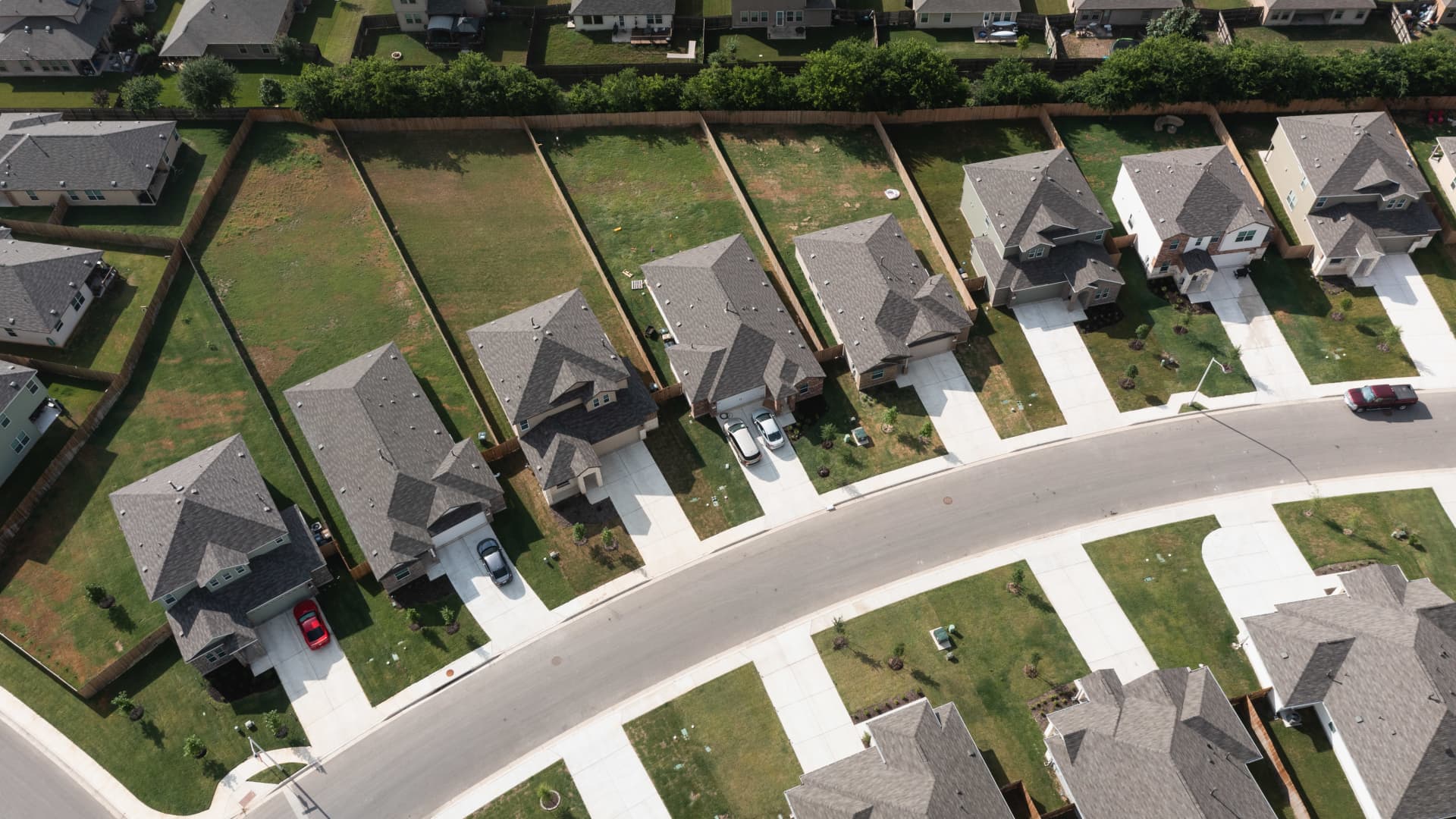
Institutional investors may control 40{0cd64a0a8f98edc6e1a333a4649a39f4fde229418ea626ab6b5ac18b9de2691d} of U.S. single-family rental homes by 2030, according to MetLife Investment Management. And a group of Washington, D.C., lawmakers say Wall Street needs to back away from the market.

“What we’re saying is don’t have private equity buying up single-family homes,” said Rep. Ro Khanna, a Democrat representing California’s 17th Congressional District. Khanna is the lead author of the Stop Wall Street Landlords Act of 2022. “What’s outrageous is your tax dollars are helping Wall Street buy up single-family homes,” he said in an interview with CNBC.

The single-family rental industry got its start with government backing in the fallout after the 2008 financial crisis. “It was that rare opportunity that attracted the institutions to build a portfolio out of these foreclosed properties,” said Steven Xiao, an assistant professor of finance and managerial economics at the University of Texas at Dallas.

Since the early 2010s, Tricon Residential, Progress Residential, American Homes 4 Rent and Invitation Homes have each bought thousands of homes. They’ve also added to the housing supply in some cases with built-for-rent communities.

Some of these companies are financed by private equity firms such as Blackstone and investment managers such as Pretium Partners.

“It’s almost a captive market,” said Jordan Ash, director of labor-jobs and housing at the Private Equity Stakeholder Project. “They’ve been very explicit about how people are shut out of the homebuying market and are going to be perpetual renters.”

These calls come after fierce housing inflation hit many Sun Belt states, including Texas, Florida and Georgia, according to the National Association of Realtors. 

The prices in some Sun Belt markets have outpaced national figures for rent inflation, according to research compiled by Zumper for CNBC. Between January 2020 and January 2023, rents for a two-bed detached home increased about 44{0cd64a0a8f98edc6e1a333a4649a39f4fde229418ea626ab6b5ac18b9de2691d} in Tampa, Florida, 43{0cd64a0a8f98edc6e1a333a4649a39f4fde229418ea626ab6b5ac18b9de2691d} in Phoenix, and 35{0cd64a0a8f98edc6e1a333a4649a39f4fde229418ea626ab6b5ac18b9de2691d} near Atlanta. That’s compared with a 24{0cd64a0a8f98edc6e1a333a4649a39f4fde229418ea626ab6b5ac18b9de2691d} increase nationwide.

Industry advocates argue that they do not control enough market share to dictate prices in any market. Large institutions owned roughly 5{0cd64a0a8f98edc6e1a333a4649a39f4fde229418ea626ab6b5ac18b9de2691d} of the 14 million single-family rentals nationally in early 2022, according to analysts.

By 2030, the institutions may hold some 7.6 million homes, or more than 40{0cd64a0a8f98edc6e1a333a4649a39f4fde229418ea626ab6b5ac18b9de2691d} of all single-family rentals on the market, according to the 2022 forecast by MetLife Investment Management.

In the short term, however, some companies may retreat from the real estate market as correction concerns mount. “You will see some selling by us,” said Jon Gray, Blackstone’s chief operating officer, in a December 2022 interview with CNBC.

Watch the video above to learn about the rise and future of corporate landlords in the United States.

What it’s like to live among corporate-owned rental homes

What it’s like to live among corporate-owned rental homes

Credit rating: HYOSUB SHIN / AJC

The pool has been shut extra than calendar year at Parkview Estates in South Fulton soon after some householders retained attorneys to oppose designs to develop at the very least a hundred additional houses to rent, said Pernell Evans, who purchased his house in 2008. (Hyosub Shin / Hyosub.Shin@ajc.com)

Credit score: HYOSUB SHIN / AJC

The Parkview Estates group clubhouse displays a lack of upkeep, which some people say is owing to solid-arm tactics from ResiBuilt. (Hyosub Shin / Hyosub.Shin@ajc.com)

It is the organization product, they say, to offload repairs onto tenants, although retaining fees very low on administration and servicing as the every month stream of rent checks rolls in.

The expanding existence of renters in historically proprietor-occupied neighborhoods, nevertheless, also has exacerbated tensions in between unique owners and renters.

Some problems are about appearances.

“I contact him ‘park-on-the-grass dude,’” stated home-owner Mike Donithan, who went to chat with a renter to complain about a predicament that violates South Fulton code. “The dude reported, ‘I did not know,’” Donithan stated. “And then he went again to parking on the grass.”

At least in South Fulton, area officers sided with house owners, blocking the Parkview enlargement. A different lawsuit in between the town and ResiBuilt is wending its way as a result of the lawful procedure, while preparations for design have continued. Staff for ResiBuilt have minimize roads and a roundabout into the purple clay alongside with pipes to serve a phase of upcoming rental homes.

Credit: HYOSUB SHIN / AJC

Parkview Estates in South Fulton acquired its start in the early 2000s, at the tail finish of the housing boom, when a developer bought hundreds of acres about 10 miles west of Hartsfield-Jackson International Airport. The agency constructed dozens of homes, saving a handful to hire. As the bubble burst, the builder stopped developing. The land was offered in 2021 to ResiBuilt Houses, an Atlanta-dependent company with programs to complete the subdivision as rentals. (Hyosub Shin / Hyosub.Shin@ajc.com)

‘Good luck receiving in touch’

Often, as in Parkview Estates, buyers aim to incorporate residences to a neighborhood, constructing them with the reason of renting them. In some cases investors enter a neighborhood, obtaining existing homes and turning them into rentals.

Much more than 40 miles northeast of Parkview Estates, a Lawrenceville neighborhood has both.

The 172 homes in Grayland Hills include about 10{0cd64a0a8f98edc6e1a333a4649a39f4fde229418ea626ab6b5ac18b9de2691d} that ended up procured by investors and are rented out. Just throughout Pew Creek are newer rental residences on August West Way, Cassady Lane and Stella Court docket.

Metro Atlanta residence values have risen throughout the board from 2012 to 2022. But the AJC’s investigation uncovered they climbed additional sharply in destinations wherever traders have a lot more properties. In the 30 ZIP codes with the most trader-owned properties, house values appreciated at practically twice the annual amount as the 30 ZIP codes where investors possess the the very least.

“The firms renting have commenced to favor new properties simply because you do not have to do any perform, there’s a lot considerably less maintenance,” mentioned Kelly Kim, an agent at Ansley True Estate.

But in a potent housing market place, renters can see reliable and recurrent hire hikes, particularly in more recent households, some thing of an incentive not to stick about.

Credit rating: HYOSUB SHIN / AJC

Between the neglected facilities at Parkview Estates is the community’s basketball court docket. (Hyosub Shin / Hyosub.Shin@ajc.com)

David Gonzalez climbed out of his truck 1 uncooked and wet afternoon in early December, coming house from a design task to the August West Way household he’s been leasing. He said he’s satisfied with the home, except for the rent, which has climbed from $1,500 to $1,800.

“I’ve seen large amount of persons go in and out. And I will not be listed here considerably for a longer time,” Gonzalez stated, citing rising rents.

Lauren Dastrup life with her family members in an 1,800 square-foot property in a cul-de-sac surrounded by rentals. She said it is occasionally obvious which properties aren’t operator-occupied, in particular all those with a good deal of vehicles.

“Porches tumble apart. Roofs want to be repaired,” Dastrup reported. “And the operator is a company that does not treatment.”

The spot does not have a homeowners association, which suggests no arranged watchdog to watch abuses.

“The firms renting have began to desire new households because you don’t have to do any do the job, there’s a large amount considerably less routine maintenance.”

– Kelly Kim, an agent at Ansley True Estate

Stephanie Henriksen, president of the HOA at Cramac Plantation, west of downtown Lawrenceville and a minor more than a mile from August West Way, said when a house is in disrepair, even an energetic HOA like hers has issues acquiring the significantly-off corporate house owners.

“Good luck acquiring in touch with the folks who individual these households,” Henriksen claimed.

Her team not too long ago referred to as in the town to offer with a rental that in some cases experienced 10 or a lot more vehicles in the driveway and avenue. There’s a lawful restrict of 4, she explained.

“It was not even an HOA rule,” she explained, “that’s town code.”

That is commonly how city officers listen to about troubles, stated Chuck Warbington, Lawrenceville city manager.

In response, the town has built alterations to its regulations. Now, if there are any code violations, the city requires both equally renter and operator to court to get them fixed. And when there is a residential re-zoning, the metropolis limitations rentals to 10{0cd64a0a8f98edc6e1a333a4649a39f4fde229418ea626ab6b5ac18b9de2691d} of the homes influenced.

“When there is a clustering of individuals properties,” he reported, “it results in being an problem to the in general group.”

In Grayland Hills, Camille and Patrick Cagle pay out a small over $1,800 a thirty day period for a person of six or 7 rental houses on their avenue. They like the location and the property, but then a pipe broke in their basement, and they attempted to get hold of their landlord, Principal Street Renewal, the third-largest operator of one household properties in metro Atlanta.

Credit history: HYOSUB SHIN / AJC

“We had been all blindsided when they started chopping down trees,” suggests Parkview Estates homeowner Mike Donithan, correct. Some owners, looking at the affect of the expansion of rental residences on their own belongings, have currently headed for the exits. (Hyosub Shin / Hyosub.Shin@ajc.com)

“I’d contact and convey to them about it, and wait around,” Patrick Cagle reported. “Then I’d connect with and convey to them about it. And wait. …No just one referred to as back. No 1 emailed.”

They obtained a response only soon after calling some executives. By then, it had been 78 times.

“There was standing drinking water in the basement,” he explained. “And if the destruction didn’t get fixed whilst we have been there, when we moved out, we’d get charged for it.”

Major Avenue Renewal is section of the Amherst Group, a real estate financial commitment firm. Amherst said a glitch in its inside method delayed its handling of the basement leak for about two and a 50 percent months.

State Sen. Nikki Merritt, who signifies Grayland Hills and August West Way, mentioned she wishes the law to make it a lot easier to make absentee corporate landlords accountable for issues.

“I’m not versus rentals,” she mentioned. “The landlords are the trouble. The Wall Avenue people who have uncovered them selves a new money cow.”

A proposal prior to the legislature past calendar year would have tied the arms of neighborhood officials in restricting rentals. The evaluate was shelved, but a new version was submitted this week in the condition Senate.

‘Blindsided’

In the meantime, some homeowners appear all over at the rentals, contemplate the effect on their possess belongings and head for the exits.

Jonah Ndukwe, a former Parkview Estates resident, definitely favored his household and the South Fulton neighborhood. But he offered and moved to Cobb County a yr ago, fearing the developer’s ideas to make rentals.

“I would have most likely moved anyway, but that sped up the system for me,” he stated.

The neighbors he still left powering in Parkview Estates have ongoing to grapple with their problems.

Homeowners dropped their personal legal effort and hard work to prevent developers when the growth was blocked by the city, which is now tussling with ResiBuilt in courtroom.

“We have been all blindsided when they started off reducing down trees,” Donithan, a Parkview Estates owner, explained throughout a crisp autumn stroll.

In the distance, grading equipment seemingly prepared for an end to the lawful road blocks to expansion, scraping out new streets for paving.

John Perry, technical director of the AJC’s knowledge journalism staff, contributed to this write-up.